
-
Greatest cyber vulnerabilities are people, says cybersecurity expert
Dr. Cedric Jeannot, the founder and president of I Think Security, recently sat down with Eugene K. Chow, the executive editor of Homeland Security NewsWire, to discuss the latest rash in cyberattacks on companies, why hackers have been so successful, and the fallout from the RSA SecurID attacks
-
-
Improving critical infrastructure protection
Salt River Project (SRP), the U.S. third-largest public power utility, recently announced that it had teamed with Quantum Secure to help protect its facilities
-
-
Business group: cybersecurity critical to U.S. economic, national security
The Technology CEO Council says that Private sector steps to strengthen the U.S. digital infrastructure combined with new policies and government actions are important to America’s national and economic security
-
-
Collaborative social media site for ID and biometric professionals
Cost overruns, project delays, and poor performance results have long been the bane of government projects, at times resulting in expensive high-profile failures; to help reduce costs and ensure that government projects meet targeted needs, a new collaborative Web-based information-sharing community aimed at bringing together identity and biometric industry professionals, academics, researchers, and government and commercial procurement officers is slated to open
-
-
Army contracting scandal reaches DHS
A $20 million contracting scandal involving the Army Corps of Engineers has now grown to include DHS; last week, Representative Edward J. Markey (D-Massachusetts) expanded the congressional probe to gather information on EyakTek, an Alaskan-native corporation that has received more than $1 billion in set-aside contracts from DHS and the Army
-
-
Danish designer wins completion for new U.K. pylons
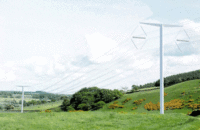
There are 88,000 pylons in the United Kingdom, carrying 400,000 volts of electricity over thousands of miles across the country; the design of the pylons has barely changed in eighty years – and a winner has just been announced in the competition for a new pylon design
-
-
Little progress despite $3.4 billion spent on food safety programs

In the past decade the U.S. government has gone to great lengths to secure the nation’s food supply against terrorists, but more than $3.4 billion later it has little to show for its efforts; despite all the government spending, key food safety programs and counter-terror policies have been bogged down by a murky, convoluted bureaucratic process
-
-
Iranian airline sanctioned for ties to terrorism
On Wednesday the U.S. Treasury Department imposed sanctions on sanctioned Mahan Air, an Iranian airline, for supporting terrorism
-
-
Sony hit by hackers again, 93,000 accounts compromised
Once again Sony has been the victim of a major cyberattack. This time as many as 93,000 accounts have been compromised from Sony Entertainment Network, PlayStation Network, and Sony Online Entertainment
-
-
UN warns record food prices to continue
Food prices are projected to continue skyrocketing and remain volatile leaving poor countries and consumers exposed to food insecurity, according to a recently released UN report
-
-
Michigan to launch cyber command center and defense teams
To help boost the state’s economy and its role in securing the nation’s data networks, Michigan recently announced that it plans to launch a cyber command center and cyber defense response teams
-
-
Public-private partnership in homeland security
The Homeland Security and Defense Business Council says that job of securing the U.S. homeland is an extensive and daunting mission that cannot be accomplished by government alone; it requires that the United States, collectively, become a resilient nation, with the capabilities needed to prepare for, protect against, respond to, recover from, and mitigate against all threats
-
-
Focus on terrorism allowed foreign pests to slip into U.S.

Following the 9/11 attacks the U.S. government assigned hundreds of agricultural scientists responsible for stopping invasive species at the border to anti-terrorism duties; the result has been that dozens of foreign insects and plant diseases managed to slip undetected into the United States
-
-
Doyenz, Lifeboat Distribution in distribution agreement
Lifeboat Distribution, a software distributor for disaster recovery, will distribute Doyenz’s cloud-based recovery services to thousands of its reseller partners across North America
-
-
Blackberry service disruption spreads across North America
Research in Motion announced earlier today that the 3-day disruption of the company’s e-mail services has now spread across North America; it is the worst such disruption of service in two years; analysts say it is a major blow to the already-struggling company; not only individuals, but also private companies and government agencies may now reconsider their reliance on Blackberrys as their preferred mode of communication
-

The long view
U.S. Needs New Drought Assessment Framework as Droughts Become More Severe and Unpredictable
Droughts in the United States are becoming more intense and unpredictable, and the nation needs to develop a new drought assessment framework to better understand and address them. A new framework should be developed which distinguishes between short-term operational needs, such as drought monitoring and emergency response, and long-term planning for water management, infrastructure, and climate adaptation.