
-
First class of U.S. Army soldiers completed training with Raytheon's JLENS
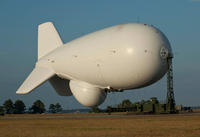
JLENS uses a powerful integrated radar system to detect, track, and target a variety of threats, allowing military units to defend against threats, including hostile cruise missiles, low-flying manned and unmanned aircraft, large caliber rockets, and moving surface vehicles such as boats, SCUD-launchers, automobiles, and tanks
-
-
College buys small UAV for first-responder training program
Sinclair Community College in Dayton, Ohio purchases small unmanned aerial system (SUAS) from UTC Aerospace Systems for use in the college’s training program for first responders
-
-
First ever outdoor flight test of laser powered UAS
Lockheed Martin, LaserMotive, Inc. have completed a series of flight tests of the Stalker Unmanned Aerial System (UAS) to validate the performance of an innovative laser power system
-
-
Obama considering executive order for infrastructure protection
President Barack Obama is exploring whether to issue an executive order to protect the U.S. critical computer infrastructure from cyber attacks; White House sources say an executive order is being considered after a 2 August procedural vote in the Senate that all but doomed a scyberecurity bill endorsed by Obama as well as current and former national security officials from both Republican and Democratic administrations
-
-
Silent Falcon solar electric unmanned aerial system unveiled
Silent Falcon UAS Technologies last week unveiled the much anticipated Silent Falcon solar electric unmanned aerial system (UAS) at the Association for Unmanned Vehicle Systems International (AUVSI) conference in Las Vegas
-
-
Engineers solve leaky water pipes problem
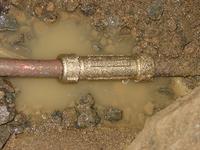
Leaky pipes are a common problem for the water industry: according to the U.K. Water Services Regulation Authority (OFWAT), between 20 and 40 percent of our total water supply can be lost through damaged pipes; developing more accurate ways of finding leaks would enable water companies to save revenue and reduce their environmental impact
-
-
Manned planes beating drones as the more capable tool in war on drugs

In the never-ending war on drugs, U.S. Navy planes are showing that technology does not necessarily mean improvement, as manned planes are outmaneuvering unmanned drones in catching cocaine smugglers traveling by sea; in 2011 the manned planes caught an average of $30 million of cocaine per day, and during the last five years they have detected more than 853,000 pounds of cocaine
-
-
Researchers move a step closer toward universal flu vaccine and therapies
Researchers describes three human antibodies that provide broad protection against Influenza B virus strains; the same team had previously reported finding broadly neutralizing antibodies against Influenza A strains; the work is a key step toward “universal” vaccine and therapies against flu
-
-
Futuristic blended wing body aircraft passes flight test

Boeing took another step forward in exploring a revolutionary concept — the blended wing body (BWB) — which one day could offer breakthroughs in flight; the X-48B, an unmanned research aircraft which is a scale model of a heavy-lift, subsonic vehicle that forgoes the conventional tube-and-wing airplane design in favor of a triangular aircraft that effectively merges the vehicle’s wing and body, proved during a flight test program that a BWB aircraft can be controlled as effectively as a conventional tube-and-wing aircraft during takeoffs and landings, as well as in other low-speed segments of the flight regime
-
-
Wastewater key to addressing growing global water shortage
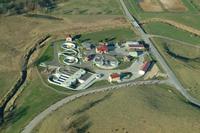
Parched cities and regions across the globe are using sewage effluent and other wastewater in creative ways to augment drinking water, but four billion people still do not have adequate supplies, and that number will rise in coming decades
-
-
Water sustainability flows through complex human-nature interactions
The fate of water in China mirrors problems across the world: water is fouled, pushed far from its natural origins, squandered, and exploited; China’s crisis is daunting, though not unique: two-thirds of China’s 669 cities have water shortages, more than 40 percent of its rivers are severely polluted, 80 percent of its lakes suffer from eutrophication — an over abundance of nutrients — and about 300 million rural residents lack access to safe drinking water
-
-
Concerns about U.S. grid grow along with demand for power

The U.S. grid is stretched to capacity and severely outdated; some experts fear that blackouts in the past years in New York, Boston, and San Diego will become more frequent in the near future unless a multi-billion dollar overhaul is worked out
-
-
Immediate, in-the-field identification of hazardous materials
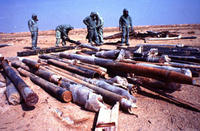
Soldiers in war zones, and law enforcement and first responders on the scene will soon have the ability to collect and immediately analyze trace amounts of potentially dangerous chemical, explosive, or biological agents with the help of a surface swabbing device developed and prototyped by a Maine-based technology company with the help of the University of Maine researchers
-
-
New detection device for forensic and security applications
A new biological sampling and detection device could soon be used by first responders in the forensic and security sectors; the patented technology allows for rapid sampling of up to eight targets simultaneously, testing powder, liquids, or surfaces directly and has applications across the forensic and security areas
-
-
World facing increasingly challenging water situation
New measure developed for sustainability of global groundwater water supply points to overuse of water in Asia and North America; approximately 1.7 billion people, most residing in Asia, live in areas where groundwater resources or groundwater-dependent ecosystems are under threat
-

The long view
Factories First: Winning the Drone War Before It Starts
Wars are won by factories before they are won on the battlefield,Martin C. Feldmann writes, noting that the United States lacks the manufacturing depth for the coming drone age. Rectifying this situation “will take far more than procurement tweaks,” Feldmann writes. “It demands a national-level, wartime-scale industrial mobilization.”
Trump Is Fast-Tracking New Coal Mines — Even When They Don’t Make Economic Sense
In Appalachian Tennessee, mines shut down and couldn’t pay their debts. Now a new one is opening under the guise of an “energy emergency.”
Smaller Nuclear Reactors Spark Renewed Interest in a Once-Shunned Energy Source
In the past two years, half the states have taken action to promote nuclear power, from creating nuclear task forces to integrating nuclear into long-term energy plans.