
-
Funding restored to National Biodefense Analysis and Countermeasures lab
The Fort Detrick, Maryland-based National Biodefense Analysis and Countermeasures Center (NBACC) is no longer facing an immediate jeopardy. The federal omnibus spending bill, released last Wednesday evening, provided full funding for the biohazard laboratory – funding which the original administration’s budget proposal eliminated.
-
-
Lawmakers urge State Department to counter Russia’s anti-Semitic propaganda
S ix senators called on called on Deputy Secretary of State John Sullivan to commit to countering anti-Semitic Russian propaganda identified by the intelligence community, the Anti-Defamation League, and social media networks. The senators pressed Sullivan to devote part of the $120 million recently provided to the State Department to counter Russian disinformation to specifically target Russian anti-Semitic propaganda.
-
-
U.S. not ready to fend off Russian meddling in the 2018 midterms: GOP, Dem. lawmakers
Dan Coats, the director of national intelligence (DNI), told lawmakers two weeks ago that “the Unsaid States is under attack” by Russia. On Wednesday, the Senate Intelligence Committee held hearings about how the United States was addressing one of the components the three-pronged Russian attack: Russia’s ambitious effort to undermine and discredit American democracy by attacking the U.S. election infrastructure. Homeland Security Secretary Kirstjen Nielsen and former DHS secretary Jeh Johnson were confronted by pointed questions from both Republicans and Democrats, questions which revealed a bipartisan consensus that the United States is not prepared to fend off Russian meddling in the 2018 midterms.
-
-
Senate Intel Committee: Initial election security recommendations for 2018 election cycle
The Senate Select Committee on Intelligence will hold an open hearing today, Wednesday, 21 March 2018, on the threats to election infrastructure. The hearing will cover Russian attempted attacks on state election infrastructure in 2016, DHS and FBI efforts to improve election security, and the view from the states on their cybersecurity posture. The committee yesterday made available its initial recommendations on election security after investigating Russian attempts to target election infrastructure during the 2016 U.S. elections.
-
-
Lawmakers question lack of effort by State, Defense in countering Russian disinformation
A bipartisan group of six members of the U.S. Senate Foreign Relations Committee have urged the State Department and the Department of Defense to explain why tens of millions in federal funds designated to counter disinformation and propaganda from foreign governments like Russia have not been spent. The Senators’ letter comes in response to a report that the State Department has not spent any of the $120 million Congress allocated to the Department to combat foreign meddling in U.S. elections.
-
-
New Congressional Biodefense Caucus launched
A new Congressional Biodefense Caucus was launched last Monday. The caucus said it already has a bipartisan membership roll which includes twenty-seven Members of Congress. The caucus is “dedicated to strengthening our nation’s biodefense enterprise and national security.”
-
-
National security officials' letter supporting bipartisan Secure Elections Act
A bipartisan groups of former national security officials and lawmakers sent a letter to all U.S. senators in support of the Secure Elections Act (S. 2261). The legislation, introduced by Senators James Lankford (R-OK), Amy Klobuchar (D-MN), Lindsey Graham (R-SC), Kamala Harris (D-CA), Susan Collins (R-ME), and Martin Heinrich (D-NM), would empower states to address rising cybersecurity risks to American elections without undermining their control over the administration of those elections.
-
-
Dem. leaders want $300 million for FBI, DHS to protect U.S. election from Russia
The Democratic leaders in the Senate and House on Wednesday sent a letter to Senate Majority Leader Mitch McConnell (R-Kentucky) and Speaker of the House Paul Ryan (R-Wisconsin), demanding that $300 million be given to the FBI and DHS so they can thwart more meddling by foreign powers. The letter urges state and local governments to bolster their defense against cyberattacks, including the replacement of outdated voter registration and voting systems, after the FBI and DHDS confirmed that Russian government operatives, in 2016, tried to attack these components of the U.S. election system in twenty-one states.
-
-
Bill to jump-start universal flu vaccine efforts
As the nation grapples with a long and unrelenting flu season rivaling by some measures the 2009 H1N1 pandemic, a group of U.S. senators last week unveiled a proposal to invest $1 billion in research over the next 5 years to create a universal flu vaccine that would provide lifetime protection against a range of influenza strains. The announcement came just as U.S. researchers released an interim report card on the flu vaccine’s performance so far this season, which again showed disappointingly low effectiveness against H3N2, this season’s dominant strain.
-
-
House bill will hold Putin, others accountable for election meddling
Representatives Ileana Ros-Lehtinen (R-Florida) and Brad Schneider (D-Illinois) introduced H.R. 4884, the Defending Elections from Threats by Establishing Redlines (DETER) Act, a House companion to S. 2313 which was introduced by U.S. Senators Chris Van Hollen (D-Maryland) and Marco Rubio (R-Florida) earlier this month. The DETER Act would impose sanctions against Russia should it meddle again and requests a presidential strategy for deterring future interference by China, Iran, North Korea, or any other foreign government.
-
-
Rubio, Van Hollen introduce legislation to deter foreign interference in American elections
U.S. Senators Marco Rubio (R-Florida) and Chris Van Hollen (D-Maryland) on Tuesday introduced the Defending Elections from Threats by Establishing Redlines (DETER) Act. The senators said it sends a powerful message to any foreign actor seeking to disrupt our elections: if you attack American candidates, campaigns, or voting infrastructure, you will face severe consequences. “We cannot be a country where foreign intelligence agencies attempt to influence our political process without consequences,” said Senator Rubio. “This bill will help to ensure the integrity of our electoral process by using key national security tools to dissuade foreign powers from meddling in our elections.”
-
-
Jeff Sessions just confessed his negligence on Russia
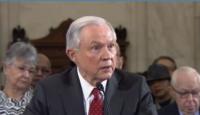
The headlines from Attorney General Jeff Session’s testimony before the Senate Judiciary Committee on Wednesday focused on his refusal to answer questions about his conversations with President Donald Trump and his declaration that he had not yet been interviewed by special counsel Robert Mueller. Lost in the back-and-forth, however, was a truly damning moment about Sessions’s tenure at the Justice Department thus far. The attorney general of the United States, though acknowledging and expressing confidence in the intelligence community’s assessment of foreign interference in the 2016 election and admitting that the government is not doing enough to guard against such activity in the future, could not identify a single step his department is taking or should take in that direction. This was a frank display of ignorant complacency in the face of a clear and demonstrated threat.
-
-
After hurricanes, Congress ponders future of flood insurance program
The devastating hit Houston took from Hurricane Harvey has exacerbated — and highlighted — the enormous financial jam facing the National Flood Insurance Program. Thanks to the recent onslaught of hurricanes hitting Texas, Florida and Puerto Rico, there has never been a greater need for the program. But that need has also set off a new round of calls to dramatically overhaul a program that hasn’t been able to sustain itself without major subsidies from the U.S. Treasury.
-
-
Why a congressional ban on bump stocks is unlikely

Even in the wake of the deadliest mass shooting in U.S. history, it appeared that nothing could shake the immovable stalemate over gun rights in Congress – but a strange thing happened: Republicans started talking about tightening regulations on firearms. But until Congress can prove otherwise, and Republicans in particular move from rhetoric to legislation, it’s reasonable to expect this latest bipartisan opening to meet a similar fate to the bipartisan move, in the wake of Sandy Hook, to expand background checks: That attempt, led by Senator Pat Toomey (R-Pennsylvania) and Senator Joe Manchin (D-West Virginia), could not overcome a Senate filibuster.
-
-
Lawmaker questions voting machine manufacturers on security measures
Following interference by Russian government operatives in the 2016 election, Senator Ron Wyden (D-Oregon) has asked the top six U.A. manufactures of voting machines how they are protecting Americans’ votes from hacking. Wyden sent similar letters to two voting system test laboratories accredited by the U.S. Election Assistance Commission.
-

- All
- Regional
- Water
- Biometrics
- Borders/Immig
- Business
- Cybersecurity
- Detection
- Disasters
- Government
- Infrastructure
- International
- Public health
- Public Safety
- Communication interoperabillity
- Emergency services
- Emergency medical services
- Fire
- First response
- IEDs
- Law Enforcement
- Law Enforcement Technology
- Military technology
- Nonlethal weapons
- Nuclear weapons
- Personal protection equipment
- Police
- Notification /alert systems
- Situational awareness
- Weapons systems
- Sci-Tech
- Sector Reports
- Surveillance
- Transportation
Advertising & Marketing: advertise@newswirepubs.com
Editorial: editor@newswirepubs.com
General: info@newswirepubs.com
2010-2011 © News Wire Publications, LLC News Wire Publications, LLC
220 Old Country Road | Suite 200 | Mineola | New York | 11501
Permissions and Policies
Editorial: editor@newswirepubs.com
General: info@newswirepubs.com
2010-2011 © News Wire Publications, LLC News Wire Publications, LLC
220 Old Country Road | Suite 200 | Mineola | New York | 11501
Permissions and Policies