
-
Making the U.S. grid sturdier, smarter, and more secure to thwart blackouts

In August 2003, fifty million customers throughout the northeastern United States and southeastern Canada lost power for up to two days. More than ten years later, the U.S. electric power system continues to be challenged. In the United States, 149 power outages affecting at least 50,000 customers occurred between 2000 and 2004, a number which grew to 349 between 2005 and 2009. In 2012, the prolonged power outages in New York and New Jersey caused by Hurricane Sandy once again demonstrated the system’s vulnerability. A broad, multidisciplinary effort by Georgia Tech researchers aims to revolutionize the delivery of electricity, advance the smart grid, thwart blackouts, integrate renewable energy sources, and secure utilities from cyberattacks.
-
-
The world likely to face more frequent, and more severe, blackouts
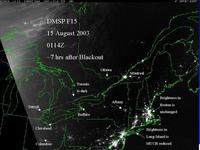
U.S. household electricity usage increased by 1,300 percent between 1940 and 2001. In the last few decades, air conditioning has been the greatest factor in increased electrical consumption, and one of the greatest sources of systematic strain, with considerably more blackouts occurring in the summer months than during winter. The electricity used to fuel America’s air conditioning is currently of a similar volume to the U.S. entire energy consumption in the 1950s. A new study reveals that today’s occasional blackouts are dress rehearsals for the future, when they will occur with greater frequency and increased severity. Power cuts will become more regular around the globe as electrical supply becomes increasingly vulnerable and demand for technology continues to grow at an unprecedented rate.
-
-
Minimizing power grid disruptions from wind power
Researchers have found that an increase in the use of wind power generation can make the power grid more fragile and susceptible to disruptions. The researchers, however, did not just identify the problem — they have also devised a technique for coordinating wind power generation and energy storage in order to minimize the potential for such power disruptions.
-
-
National grid in mock power emergency drill today and tomorrow
North American power companies will participate in a mock power emergency scenario today and tomorrow (13-14 November) to test their ability to respond to physical or cyberattacks that may lead to widespread power outages and long term blackouts. The exercise, known as GridEx II, is the second emergency response exercise conducted by North American Electric Reliability Corporation (NERC) intended to task North American electric utility companies with reviewing their security and crisis response strategies.
-
-
NIST seeks public comments on updated smart-grid cybersecurity guidelines
The National Institute of Standards and Technology (NIST) is requesting public comments on the first revision to its guidelines for secure implementation of “smart grid” technology. The draft document, NIST Interagency Report (IR) 7628 Revision 1: Guidelines for Smart Grid Cybersecurity, is the first update to NISTIR 7628 since its initial publication in September 2010.
-
-
NIST releases Preliminary Cybersecurity Framework
The National Institute of Standards and Technology (NIST) on Tuesday released its Preliminary Cybersecurity Framework to help critical infrastructure owners and operators reduce cybersecurity risks in industries such as power generation, transportation, and telecommunications. In the coming days, NIST will open a 45-day public comment period on the Preliminary Framework and plans to release the official framework in February 2014.
-
-
Bolstering national grid resilience as extreme weather events intensify
Between 2003 and 2012, an estimated 679 widespread power outages in the United States occurred due to severe weather. A recent Congressional Research Service study estimates the inflation-adjusted cost of weather-related outages at $25 to $70 billion annually. A new White House report says that grid resilience is increasingly important as climate change increases the frequency and intensity of severe weather.
-
-
SkySweeper robot inspects power lines easily, cheaply
Mechanical engineers invented a robot designed to scoot along utility lines, searching for damage and other problems that require repairs. Made of off-the-shelf electronics and plastic parts printed on an inexpensive 3D printer, the SkySweeper prototype could be scaled up for less than $1,000, making it significantly more economical than the two models of robots currently used to inspect power lines.
-
-
Robot makes inspecting power lines simple, inexpensive
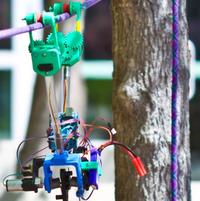
Mechanical engineers invented a robot designed to scoot along utility lines, searching for damage and other problems that require repairs. Made of off-the-shelf electronics and plastic parts printed on an inexpensive 3D printer, the SkySweeper prototype could be scaled up for less than $1,000, making it significantly more economical than the two models of robots currently used to inspect power lines.
-
-
Aging national power grid leaves U.S. vulnerable to storm-related outages
In parts of the United States where the grid system is “out in the open” and exposed to the elements — especially in our older cities — the risk increases for widespread power outages as a result of weather-related events, leading to lengthy, costly repairs.
-
-
The opportunities offered by Smart Grid R&D
The U.S. aging power grid is evolving into a modern, “smart” energy distribution network, and with these changes comes a host of challenges for the research and development community, two new reports say.
-
-
Grid-scale batteries for storing renewable energy have large carbon footprint
Most of the electricity produced in the United States comes from coal- and natural gas-fired power plants. Only about 3 percent is generated from wind, solar, hydroelectric, and other renewable sources. A key problem is that the U.S. electrical grid has virtually no storage capacity, so grid operators cannot stockpile surplus clean energy and deliver it at night, or when the wind is not blowing. Stanford scientists have developed a novel way to calculate the energetic cost of building large batteries and other storage technologies for the electrical grid. The found that the fossil fuel required to build these technologies could negate some of the environmental benefits of installing new solar and wind farms.
-
-
U.S. electric power grid “inherently vulnerable” to terrorist attacks: report
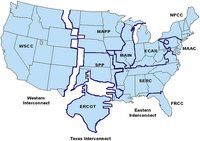
The U.S. electric power delivery system is vulnerable to terrorist attacks which could cause much more damage to the system than natural disasters such as Hurricane Sandy, blacking out large regions of the country for weeks or months, and costing many billions of dollars, says a newly released report by the National Research Council
-
-
The world’s first circuit breaker for high voltage direct current (HVDC) will enable future DC grid
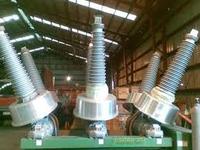
A Swiss company solves a 100-year-old electrical engineering puzzle by developing the world’s first circuit breaker for high voltage direct current (HVDC); it combines very fast mechanics with power electronics, and will be capable of “interrupting” power flows equivalent to the output of a large power station within 5 milliseconds – this is thirty times faster than the blink of a human eye; the solution will help shape the grid of the future
-
-
One solution to the aging U.S. grid: microgrids
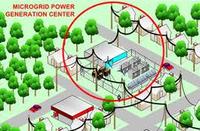
Most Americans do not have to think much about energy reliability; they plug in a computer and it powers up; they flip a switch and the lights come on; while very reliable today, the U.S. electricity grid is old and has gone at least five decades without a significant technological upgrade. The U.S. Department of Energy’s National Renewable Energy Laboratory is working with industry on one solution to help maintain a secure, reliable flow of energy: microgrids
-

- All
- Regional
- Water
- Biometrics
- Borders/Immig
- Business
- Cybersecurity
- Detection
- Disasters
- Government
- Infrastructure
- International
- Public health
- Public Safety
- Communication interoperabillity
- Emergency services
- Emergency medical services
- Fire
- First response
- IEDs
- Law Enforcement
- Law Enforcement Technology
- Military technology
- Nonlethal weapons
- Nuclear weapons
- Personal protection equipment
- Police
- Notification /alert systems
- Situational awareness
- Weapons systems
- Sci-Tech
- Sector Reports
- Surveillance
- Transportation
Advertising & Marketing: advertise@newswirepubs.com
Editorial: editor@newswirepubs.com
General: info@newswirepubs.com
2010-2011 © News Wire Publications, LLC News Wire Publications, LLC
220 Old Country Road | Suite 200 | Mineola | New York | 11501
Permissions and Policies
Editorial: editor@newswirepubs.com
General: info@newswirepubs.com
2010-2011 © News Wire Publications, LLC News Wire Publications, LLC
220 Old Country Road | Suite 200 | Mineola | New York | 11501
Permissions and Policies