
-
Electrical grid targeted by hackers
The co-chair of the Congressional Cybersecurity Caucus warns that U.S. electrical grids are becoming increasingly attractive targets for hackers in a potential cyberwar
-
-
Squirrel causes explosion, knocks out Connecticut town’s power

Last week more than 14,000 homes in Greenwich, Connecticut were left without power after a squirrel managed to find its way into a substation and caused an explosion that sent flames shooting 150 feet into the air
-
-
Danish designer wins completion for new U.K. pylons
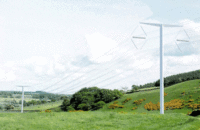
There are 88,000 pylons in the United Kingdom, carrying 400,000 volts of electricity over thousands of miles across the country; the design of the pylons has barely changed in eighty years – and a winner has just been announced in the competition for a new pylon design
-
-
'Thinking machines' will run future power grids
Plans to develop the smart grid — a system that uses intelligent computer networks to manage electric power — cannot succeed without the creation of new “thinking machines” that can learn and adapt to new situations, from power outages along the grid to fluctuations in the power supply
-
-
InfraGard launches EMP SIG
InfraGard has launched a nationwide special interest group (SIG) — named the EMP SIG, after electromagnetic pulse — which will focus on threats that could cause nationwide long-term critical infrastructure collapse
-
-
Designing a new grid pylon
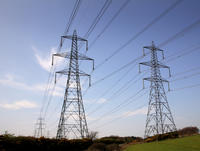
There are more than 88,000 pylons in the United Kingdom; they stand some 50-meters high, weigh around twenty tons, and carry up to 400,000 volts of electricity over thousands of kilometers of some of the most exposed, weather-beaten parts of Britain; the familiar steel lattice tower has barely changed since the 1920s; National Grid says it is time for a change
-
-
Bill calls for all utility plant worker background checks
Senator Charles Schumer (D-New York) will introduce new legislation that would require all major utility plants to run background checks on its employees; the bill would require FBI background checks on all employees of all major utility plants, strengthening the current requirement which mandates such checks only at nuclear power plants
-
-
Boeing and Siemens join forces to protect smart grid
In a bid to improve efficiency and security for the Pentagon’s electrical “smart grid,” defense giant Boeing has teamed up with German technology conglomerate Siemens to develop new technologies
-
-
"Amplified" nanotubes for efficient, loss-free grid
The current U.S. copper-based grid leaks electricity at an estimated 5 percent per 100 miles of transmission; Rice University researchers have achieved a breakthrough in the development of a cable that will make an efficient electric grid of the future possible; the armchair quantum wire (AQW) will be a weave of metallic nanotubes that can carry electricity with negligible loss over long distances
-
-
New York governor determined to close Indian Point nuclear plant
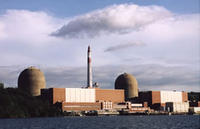
The Indian Point nuclear power plant, located thirty-five miles north of New York City, is facing increasing pressure from Governor Andrew Cuomo and senior officials say the governor is determined to shut it down; the governor’s hand has been strengthened by new legislation that streamlines the approval process for siting new power plants in New York, a move that would make it easier to replace Indian Point; closing the nuclear plant would be a major step toward reshaping the state’s energy policy as the plant produces 2,000 megawatts and provides New York City and Westchester with 25 percent of their power — but the nuclear disaster in Japan caused by the 11 March earthquake and tsunami raised fresh concerns about the plant, which is located near a fault line
-
-
Power grid experiment could throw clocks off
Beginning in July, electronic clocks in the United States could begin running as much as twenty minutes ahead; the Federal Energy Regulatory Commission (FERC), the agency in charge of the U.S. electrical grid is considering an experiment that would alter the frequency of the energy current in an effort to make the power supply more reliable and save money
-
-
Grids complicate Germany’s nuke exit
Chancellor Angela Merkel faces a daunting challenge as her cabinet must implement a plan that replaces 23 percent of the nation’s energy output as nuclear power plants are phased out; to successfully end its nuclear energy program with minimal disruptions, Germany must first build a $14.4 billion expansion of its electrical grid; electrical cables are needed to bring energy generated from offshore wind farms in the north to its manufacturing centers in the south; in addition, high-volume lines stretching to France must be built to allow for energy imports to cover any shortfalls; but Germans have long been opposed the building of new overhead power lines; the country must construct as much as 2,235 miles of cables by 2020
-
-
Dramatic increase in critical infrastructure cyber attacks, sabotage
A new study by McAfee and CSIS reveals a dramatic increase in cyber attacks on critical infrastructure such as power grids, oil, gas, and water; the study also shows that that many of the world’s critical infrastructures lacked protection of their computer networks, and revealed the staggering cost and impact of cyberattacks on these networks
-
-
The smart grid can get even smarter
Researchers are currently working on new solid-state transformers that could revolutionize the smart grid; these new devices use sophisticated semiconductors, processors, and communications hardware enabling them to handle a broad array of functions; potential uses include reducing car battery recharge time from eight hours to thirty minutes while reducing energy loss, enabling individual homes and businesses to sell power from one to another based on usage, and allowing solar panels and other renewable energy sources to be used without any additional equipment or upgrading existing power infrastructure; the devices will take several years to develop before they can be implemented
-
-
Protecting the grid from solar storm-induced blackouts
Since the beginning of the Space Age the total length of high-voltage power lines crisscrossing North America has increased nearly ten fold; this has turned power grids into giant antennas for solar storm-induced currents; with demand for power growing even faster than the grids themselves, modern networks are sprawling, interconnected, and stressed to the limit — a recipe for trouble
-

- All
- Regional
- Water
- Biometrics
- Borders/Immig
- Business
- Cybersecurity
- Detection
- Disasters
- Government
- Infrastructure
- International
- Public health
- Public Safety
- Communication interoperabillity
- Emergency services
- Emergency medical services
- Fire
- First response
- IEDs
- Law Enforcement
- Law Enforcement Technology
- Military technology
- Nonlethal weapons
- Nuclear weapons
- Personal protection equipment
- Police
- Notification /alert systems
- Situational awareness
- Weapons systems
- Sci-Tech
- Sector Reports
- Surveillance
- Transportation
Advertising & Marketing: advertise@newswirepubs.com
Editorial: editor@newswirepubs.com
General: info@newswirepubs.com
2010-2011 © News Wire Publications, LLC News Wire Publications, LLC
220 Old Country Road | Suite 200 | Mineola | New York | 11501
Permissions and Policies
Editorial: editor@newswirepubs.com
General: info@newswirepubs.com
2010-2011 © News Wire Publications, LLC News Wire Publications, LLC
220 Old Country Road | Suite 200 | Mineola | New York | 11501
Permissions and Policies