
-
QUANTUM COMPUTINGMaking hardware and software Quantum-Safe
Quantum computers are thought to have the potential to perform specialized calculations beyond the reach of any supercomputers in existence and will be able to break current public key cryptosystems used today.
-
-
SurveillancePrivacy, cost concerns check drive for more surveillance cameras
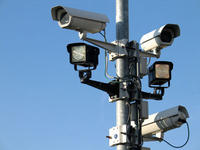
Law enforcement agencies in cities across the United States are campaigning to increase surveillance on city streets, impressed with the effectiveness of video surveillance in helping the Boston Police identify the two suspects in the Boston Marathon bombings. This campaign to expand law enforcement’s surveillance power is likely to run into stiff opposition, as Americans have proven suspicious of allowing the government powers which would infringe on privacy. Expanding surveillance networks also costs money, and these are tight budgetary times.
-
-
SurveillanceThe negative effects of increasing computerized surveillance

To understand the effects of continuous computerized surveillance on individuals, Finnish researchers equipped ten Finnish households with video cameras, microphones, and logging software for personal computers, wireless networks, smartphones, TVs, and DVDs – then followed what happened
-
-
Border securityTwo companies offer tower-based border security systems
General Dynamics C4 Systems and EADS North America have joined forces to develop border protection and security systems which exploit the both companies’ strength; the team offers tower-based, integrated radar and sensor systems for an “always-on, ever-aware” picture of human activity in and around national borders
-
-
SurveillanceNew eight-sensor carousel sensor for perimeter, internal environments
FutureSentry shows its Carousel, a monitoring device offering 360 degrees of coverage through eight, adjustable, articulating sensor heads; its close-range detection capabilities allow for it to be deployed in internal environments
-
-
SurveillanceImproving automated monitoring of security camera networks
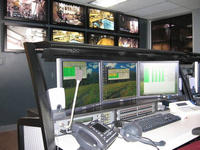
Police and security teams guarding airports, ports, and border crossings from terrorist attack or illegal entry need to know immediately when someone enters a prohibited area, and who they are; a network of surveillance cameras is typically used to monitor these at-risk locations twenty-four hours a day, but these can generate too many images for human eyes to analyze; a new approach uses mathematics to perform this analysis more accurately and in a fraction of the time it would take a human camera operator
-
-
SurveillanceCellphones could soon see through walls
Researchers have designed an imager chip that could turn mobile phones into devices that can see through walls, wood, plastics, paper, and other objects; the chip exploits the terahertz band of the electromagnetic spectrum, which is one of the wavelength ranges that falls between microwave and infrared, and which has not been accessible for most consumer devices
-
-
SurveillanceIndia's demand for CCTVs growing fast
Since the Mumbai terrorist attacks in 2008, city surveillance has become a high priority for India; India has twenty-eight states, most with a capital city and a number of other large cities, and video surveillance is being planned for many of them
-
-
SurveillanceNew surveillance system: 1 second to search through 36 million faces
New surveillance camera system can search through data on thirty-six million faces in one second
-
-
SurveillanceDHS seeks camera that sees hundreds of kilometers at once
DHS is interested in adding powerful military technology to its growing arsenal of surveillance equipment; the agency is considering new cameras that will be able to track and monitor several moving objects simultaneously over as much as four square miles
-
-
Infrastructure protectionInnovative CCTV protects copper cables
The theft of copper cables has cost the British economy an estimated £770 million a year over the last few years; British company which rely on copper cables to deliver their services are deploying an innovative CCTV to combat the thieves
-
-
Surveillance technologyCompanies urged to limit sale of surveillance tech to repressive regimes
The European Commission is urging private companies to limit the sale of surveillance technology to foreign countries that “repress” their people
-
-
SurveillancePlan for cameras and mics in U.K. cabs draws sharp criticism

Privacy advocates in Oxford, Britain are up in arms over plans to install security cameras and audio recording cameras in every taxi; the city council recently passed a plan that would require every taxi driver in town to equip their cabs with the £460 devices by 2015 or have their license revoked
-
-
Law enforcement technologyWorld's first 1080p/30fps video analytics solution on an FPGA announced
Altera Corporation said it was introducing what it described as the world’s first FPGA-based full-HD 1080p/(30 frames per second) 30fps video analytics on a Cyclone IV FPGA
-
-
SurveillanceU.S. army orders 315 reconnaissance micro-robots
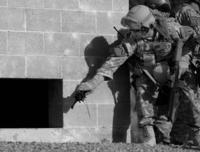
Recon Scout XT weighs 1.2lbs (540g), can be deployed in five seconds, and thrown up to 120 feet (36m); soldiers and law enforcement use the Recon Scout system to determine the layout of the enclosed spaces, identify potential IEDs, and the fix the location of friendly, indigenous, or enemy personnel
-

- All
- Regional
- Water
- Biometrics
- Borders/Immig
- Business
- Cybersecurity
- Detection
- Disasters
- Government
- Infrastructure
- International
- Public health
- Public Safety
- Communication interoperabillity
- Emergency services
- Emergency medical services
- Fire
- First response
- IEDs
- Law Enforcement
- Law Enforcement Technology
- Military technology
- Nonlethal weapons
- Nuclear weapons
- Personal protection equipment
- Police
- Notification /alert systems
- Situational awareness
- Weapons systems
- Sci-Tech
- Sector Reports
- Surveillance
- Transportation
Advertising & Marketing: advertise@newswirepubs.com
Editorial: editor@newswirepubs.com
General: info@newswirepubs.com
2010-2011 © News Wire Publications, LLC News Wire Publications, LLC
220 Old Country Road | Suite 200 | Mineola | New York | 11501
Permissions and Policies
Editorial: editor@newswirepubs.com
General: info@newswirepubs.com
2010-2011 © News Wire Publications, LLC News Wire Publications, LLC
220 Old Country Road | Suite 200 | Mineola | New York | 11501
Permissions and Policies