
-
Video analyticsSandia Lab helps small security company thwart thieves
Sandia has a long history, dating back to the 1970s, of testing sensor and video technologies for physical security systems, so in response to the security needs of a New Mexico security company, Sandia and Los Alamos labs researchers worked together to configure and test a reliable, affordable outdoor security system that helped the company more than triple its staff and clientele over five years.
-
-
Perimeter protectionSensor cable monitors fences—and can even detect low-level drones
Fenced-in areas, such as airports, nuclear power stations, industrial sites, or private plots of land, can now be monitored thanks to novel sensor technology that has been developed by a team of experimental physicists. The sensors respond immediately as soon as someone tries to climb over or cut through the fence, providing information on the precise location of the security breach.
-
-
Infrastructure protectionEarly warning systems to boost security for critical infrastructures
Using data mining, data fusion, and what are known as “rule based engines,” the EU-funded ARGOS, which stands for Advanced Protection of Critical Buildings by Overhauling Anticipating Systems, has developed an innovative early warning security system for critical infrastructure facilities, letting site operators know whether there is a potential threat. The rule-based engines allow operators to “teach” the system what alarms are true enabling systems to ‘learn’ and improve over time. The early warning systems extend the sites’ “security zone” and helps vital infrastructure to become more secure against intruders.
-
-
Nuclear operationsNNSA says security at Y-12 National Security Complex has improved
Retired Air Force lieutenant-general and now National Nuclear Security Administration(NNSA) chief Frank Klotz asserted last week that security at the Y-12 National Security Complexat Oak Ridge National Laboratory(ORNL) has improved significantly since a 28 July 2012 break-inat the plant when three aging peace activists, led by an 82-year old nun, managed to breach the facility’s supposedly impregnable perimeter security systems.
-
-
Security guardsSecurity guard industry lacks standards, training
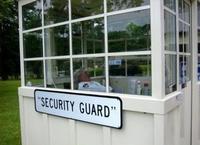
Despite playing a more important role in the wake of 9/11, the security guard industry remains plagued by inadequate training and standards in many states, new study of the $7 billion-a-year industry finds. Formal training of the nation’s one million-plus private security officers is widely neglected, a surprising finding when contrasted with other private occupations such as paramedics, childcare workers, and even cosmetologists.
-
-
Nuclear facilitiesGuard fired for Y-12 breach says he was made a scapegoat for contractor’s failings
Kirk Garland, a security guard at the Y-12 National Security Complex in Oak Ridge, Tennessee, was fired from his job two weeks after three aging peace activists, led by an 82-year old nun, managed, on 28 July 2012, to breach the facility’s supposedly impregnable perimeter security systems, then loiter, unnoticed, on the grounds of the facility, where bomb grade uranium is stored. The activists had enough time to spray-paint peace messages and Bible verses on walls, slosh the walls with human blood, and wrap one of the buildings with crime-scene tape. In an arbitration hearing, Garland argued that he was made a scapegoat for the larger failings of the then-security contractor,Wackenhut Services.
-
-
Airport perimeter securityAirports resist bolstering perimeter security because of cost
Last month’s security breach at Mineta San Jose Airport, in which a teenager entered the airfield and hid in the wheel well of a Maui-bound flight, has highlighted concerns about the security of airport perimeters. Perimeter intrusions are common at airports, but airports resist pressures to improve perimeter protection because of the costs involved. Experts note that if we were to string all of the U.S. airport perimeters together, we would approach the length of the U.S. border with Mexico and security expenditures approaching a billion dollars. These experts say that airports are not likely to invest heavily in perimeter security until a serious disaster due to lax perimeter security occurs. “Show me a body count, and we’ll build a fence,” said one airport administrator.
-
-
Nuclear facilities securityY-12 protestors receive lengthy prison terms from judge
Judge Amul R. Thapar sentenced three peace protestors who breached the Y-12 Nuclear Security Complex at Y-12 National Security Complexat Oak Ridge, Tennessee, to lengthy sentences in federal prison. Judge Thapar stated that he did not believe the three defendants — Sister Megan Rice, 84. Michael R. Walli, 65, and Greg Boertje-Obed, 59 — were terrorists but, nevertheless, they had broken the law and must serve sentences which demonstrated that the law should be taken seriously.To reach the Highly Enriched Uranium Materials Facility (HEUMF) building at Y-12, the three peace activists, led by the octogenarian Sister Rice, cut through four fences and escaped detection by security guards authorized to use lethal force, and by ground sensors, sophisticated surveillance cameras, and other security equipment described by Y-12 as “…the most stringent security system in the world.”
-
-
Infrastructure protectionOld-fashioned way to protect high-voltage substations
There are about 45,000 substations in the United States, but far fewer high-voltage substations like the one attacked last April in Metcalf. California. Americans could see what the loss of just one important power substation can have when, in 2003, a failure in one such substation knocked out power to fifty million people in the United States and Canada for days. Illinois-based IDT says that since Biblical times, the method of thick-walled fortifications to halt manned and artillery attacks remains the best technology for protecting lives and important assets. The company says that its METALITH, a several-feet-thick prefabricated steel barrier structure filled with sand, would offer the best protection to vulnerable power substations. “While most of the electrical industry has been focused on the threat of cyber-terrorism, the San Jose [Metcalf is near San Jose] attack points to the need for physical protection of strategic power grid assets as well,” says Tom Carlton, IDT’s CEO.
-
-
Perimeter protectionBarrier systems, robots reduce security costs
High-security compounds have traditionally employed security guards to protect buildings and facilities, deter intrusion, and prevent theft, but as budget cuts continue to force both private and government organizations to cut staff, some agencies are deploying portable barrier systems and robots tasked with securing organizations and their assets.
-
-
Nuclear weaponsGuards at U.K. nuclear weapons facility slept on the job, skipped routine patrols
Police officers of the U.K. Ministry of Defense police, assigned to guard Britain’s nuclear weapons, are under investigation after it has been reported that they had slept on the job and failed to complete routine patrols at a nuclear weapons facility. The Atomic Weapons Establishment (AWE) in Burghfield, Berkshire, is the location of the complex final assembly of nuclear weapons, and also where the U.K. nuclear warheads are maintained and decommissioned.
-
-
Nuclear facilities securityY-12 security breach update: Old nun awaits sentencing while costs of new Y-12 facility not to be released until 2015
On 28 July 2012, three senior citizens, led by an 83-year old nun, easily breached the supposedly impregnable security systems protecting the Y-12 National Security Complex at Oak Ridge, Tennessee. The three peace activists wondered the grounds of the maximum security facility for a while before being noticed by security personnel. While the three aging protesters are awaiting sentencing, the two companies — Bechtel Corporation and Babcock and Wilcox – which were responsible for designing and implementing security at Y-12, have been named as the primary construction contractors for planning and design of the new uranium processing facility (UPF) to be built at Y-12.
-
-
DetectionDetecting threats in a crowd
Around a military camp situated close to a built-up area there are always people moving about. Scientists at FOI, the Swedish Defense Research Agency, have created a multi-sensor system designed to be able to detect threats by identifying unusual patterns of movement involving individuals or groups.
-
-
Perimeter lightingCAST’s webinar on perimeter lighting
The CAST LED Perimeter Lighting System has won many awards and recognitions in the lighting and security industries in 2012. On 20 and 21 March, it offers an “In-Depth Perimeter Lighting Webinar.”
-
-
Nuclear facilitiesY-12 and operator error
Three anti-nuclear activists, led by an 82-year old nun, breached the perimeter security system of the supposedly highly secure Y-2 nuclear facility at Oak Ridge, Tennessee, where nuclear weapons components are manufactured (note that the Oak Ridge National Laboratory [ONRL] is not affiliated with the Y-12 National Security Complex); they then spent several hours in a secure area of the facility, leisurely spray-painting slogans on the facility’s walls – without the facility’s security staff, or the sophisticated $500 million security cameras and sensors, detecting them; to understand what happened at Y-2, we must accept that operator error is an essential problem in national security, and that the problem is pervasive and normal; the only way to deal with the operator error phenomenon is to build redundancies into the system
-

- All
- Regional
- Water
- Biometrics
- Borders/Immig
- Business
- Cybersecurity
- Detection
- Disasters
- Government
- Infrastructure
- International
- Public health
- Public Safety
- Communication interoperabillity
- Emergency services
- Emergency medical services
- Fire
- First response
- IEDs
- Law Enforcement
- Law Enforcement Technology
- Military technology
- Nonlethal weapons
- Nuclear weapons
- Personal protection equipment
- Police
- Notification /alert systems
- Situational awareness
- Weapons systems
- Sci-Tech
- Sector Reports
- Surveillance
- Transportation
Advertising & Marketing: advertise@newswirepubs.com
Editorial: editor@newswirepubs.com
General: info@newswirepubs.com
2010-2011 © News Wire Publications, LLC News Wire Publications, LLC
220 Old Country Road | Suite 200 | Mineola | New York | 11501
Permissions and Policies
Editorial: editor@newswirepubs.com
General: info@newswirepubs.com
2010-2011 © News Wire Publications, LLC News Wire Publications, LLC
220 Old Country Road | Suite 200 | Mineola | New York | 11501
Permissions and Policies