
-
DISASTERSLeveraging Social Media During a Disaster
During a disaster, many people turn to social media seeking information. But communicating during disasters is challenging, especially using an interactive environment like social media where misinformation can spread easily.
-
-
IEDsIdentifying Skin Proteins Left on IEDs
Following a terrorist bombing, can the bomb maker be identified by skin proteins left on the bomb components they handled? A small team of biology and explosives experts combined their knowledge and experience to successfully carry out a series of 26 confined detonations over a three-day period.
-
-
IEDsProtecting soldiers from blast-induced brain injury
Researchers have developed a new military vehicle shock absorbing device that may protect warfighters against traumatic brain injury (TBI) due to exposure to blasts caused by land mines. During Operations Iraqi Freedom and Enduring Freedom, more than 250,000 warfighters were victims of such injuries. Prior to this study, most research on blast-induced TBI has focused on the effects of rapid changes in barometric pressure, also known as overpressure, on unmounted warfighters.
-
-
TerrorismMelbourne Christmas Day terror suspects had “mother of Satan” chemicals: Expert
A court in Australia was told that volatile chemical explosives, nicknamed “mother of Satan,” were found in the possession of four men accused of plotting a Christmas Day terrorist attack in Melbourne. The Australian reports that federal police chemicals expert Dr. Vincent Otieno-Alego told Melbourne magistrates court on Tuesday that he analyzed substances that could produce up to 2g of triacetone triperoxide (TATP).
-
-
Bomb squads Bomb squads to compete in annual Robot Rodeo
Robots are life-saving tools for bomb squads and emergency response teams, providing them a buffer from danger. Sandia National Laboratories is hosting the 11th annual Western National Robot Rodeo, a four-day event where civilian and military bomb squad teams get practice using robots to defuse diverse, dangerous situations.
-
-
IEDsCountering enemy IEDs in culverts
Culverts are creeks or streams that run under roads to prevent flooding, and that terrorists often use these areas to kill soldiers. The Joint Improvised-threat Defeat Agency (JIDA) challenge, held 13-21 September at Fort Benning, tested industry vendor equipment from around the United States in order to counter enemy improvised explosive devices (IEDs) in culverts.
-
-
RoboticsBomb squads compete at Sandia Labs’ Robot Rodeo
Robots are life-saving tools for the nation’s hazardous device teams, providing a buffer between danger and first responders. Beginning this past Monday, Sandia Lab hosted its ninth annual Western National Robot Rodeo and Capability Exercise at Sandia National Laboratories. The five-day event – 11-15 May — offers a challenging platform for civilian and military bomb squad teams to practice defusing dangerous situations with robots’ help.
-
-
ExplosivesThe National Explosives Task Force keeps a watchful eye on IEDs
The National Explosives Task Force (NETF) is a multi-agency assemblage of bomb technicians, analysts, and professional staff formed in 2011 quickly to analyze and disseminate intelligence related to improvised explosive devices (IEDs) and other explosive materials in the United States. It includes personnel from the FBI, the Bureau of Alcohol, Tobacco, Firearms, and Explosives (ATF), the Department of Homeland Security, and the Office of the Director of National Intelligence. The NETF’s main functions include gathering and analyzing intelligence on explosives, integrating the intel into investigations (to disrupt plots, for example), and pushing information out to partners — which include more than 3,100 public safety bomb technicians on more than 400 bomb squads around the country.
-
-
IEDsSandia Labs-developed IED detector being transferred to the U.S. Army
Though IED detonations have declined in Afghanistan since a peak of more than 2,000 in the month of June 2012, Department of Defense reports indicated IEDs accounted for about 60 percent of U.S. casualties that year. Detecting improvised explosive devices in Afghanistan requires constant, intensive monitoring using rugged equipment. When Sandia researchers first demonstrated a modified miniature synthetic aperture radar (MiniSAR) system to do just that, some experts did not believe it. Those early doubts, however, are gone. Sandia’s Copperhead — a highly modified MiniSAR system mounted on unmanned aerial vehicles (UAVs) — has been uncovering IEDs in Afghanistan and Iraq since 2009. Now, Sandia is transferring the technology to the U.S. Army to support combat military personnel.
-
-
Explosives detectionReducing security threats from explosives
Researchers, as part of the Awareness and Localization of Explosives-Related Threats center (ALERT), a DHS Center of Excellence, are working on ways to detect explosives and neutralize their impact. The researchers are developing portable detectors as well as larger systems to scan for explosives. Some technologies will analyze the spectrum of light shining through vaporized samples; others will analyze solid residues.
-
-
IEDsArmy engineers develop new roadway threat detection system
Explosives along roadways remain an unrelenting hazard for deployed soldiers; U.S. Army engineers have developed a system for detecting possible threats by identifying potential threat locations on unimproved roads; the system can perform region of interest cueing of threats at greater standoff distances, which can be further interrogated by the radar as the vehicle gets closer to the threat
-
-
Explosives detectionDifferent technologies aim to replace dogs as explosives detectors
Bomb-sniffing dogs are the best and most popular way for airport security quickly to detect anyone planning to bring explosives to an airport; scientists are trying to change that; Dr. Denis Spitzer and his colleagues, for example, are working on a sensor that will detect vapors of TNT and other explosives in very faint amounts; the device they are trying to create would replace dogs as the top bomb detecting method in the field
-
-
IEDsLifelike, cost-effective robotic hand disables IEDs
Researchers at Sandia National Laboratories have developed a cost-effective robotic hand that can be used in disarming improvised explosive devices, or IEDs; the Sandia Hand addresses challenges which have prevented widespread adoption of other robotic hands, such as cost, durability, dexterity, and modularity
-
-
Explosives detectionU.S. Army trains rats in explosives detection
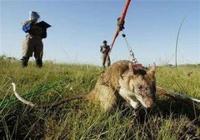
Landmines kill between 15,000 and 20,000 people a year, and continue to kill adults and children decades after a conflict ends; the U.S. Department of Defense currently relies on dogs as the animal of choice for explosives detection, but Pentagon researchers want to see whether rats can be trained to do the job; rats are smaller so they can search smaller spaces than a dog can, and are easier to transport
-
-
IEDsAdvanced IED detectors save lives
Almost 60 percent of all coalition forces wounded or killed in Afghanistan since the start of the war in 2001 have been due to IEDs; to complicate matters, insurgents in Afghanistan have been increasingly constructing IEDs to circumvent simple metal detectors; some IEDs contain rudimentary materials such as wooden boards, foam rubber, and plastic containers; the finished product contains very little metal making it difficult for a traditional metal detector to pick up
-

- All
- Regional
- Water
- Biometrics
- Borders/Immig
- Business
- Cybersecurity
- Detection
- Disasters
- Government
- Infrastructure
- International
- Public health
- Public Safety
- Communication interoperabillity
- Emergency services
- Emergency medical services
- Fire
- First response
- IEDs
- Law Enforcement
- Law Enforcement Technology
- Military technology
- Nonlethal weapons
- Nuclear weapons
- Personal protection equipment
- Police
- Notification /alert systems
- Situational awareness
- Weapons systems
- Sci-Tech
- Sector Reports
- Surveillance
- Transportation
Advertising & Marketing: advertise@newswirepubs.com
Editorial: editor@newswirepubs.com
General: info@newswirepubs.com
2010-2011 © News Wire Publications, LLC News Wire Publications, LLC
220 Old Country Road | Suite 200 | Mineola | New York | 11501
Permissions and Policies
Editorial: editor@newswirepubs.com
General: info@newswirepubs.com
2010-2011 © News Wire Publications, LLC News Wire Publications, LLC
220 Old Country Road | Suite 200 | Mineola | New York | 11501
Permissions and Policies