
-
SustainabilityInvestment portfolios may take short-term hits as a result of climate change sentiment
A new report reveals that global investment portfolios could lose up to 45 percent as a consequence of short-term shifts in climate change sentiment. The report concluded that about half of this potential loss could be avoided through portfolio reallocation, while the other half is “unhedgeable,” meaning that investors cannot necessarily protect themselves from losses unless action on climate change is taken at a system level.
-
-
Cyber businessPentagon to invest in Silicon Valley tech startups to help develop advanced cyber solutions
The Pentagon will begin to invest in Silicon Valley tech startups as part of the department’s plan to develop and acquire more advanced cyber solutions to secure the country and military’s digital infrastructure. The investments will be made through In-Q-Tel, a nonprofit strategic investing firm the Central Intelligence Agency launched sixteen years ago. In-Q-Tel does not invest in companies alone, but rather relies on traditional venture firms to partner and contribute the lion’s share of the funding, so having them on board is critical for the program’s success.
-
-
Emergency alertsFormer Israeli PM Ehud Barak invests $1 million in emergency reporting app developer
Israeli start-up Reporty Homeland Security has raised $1 million from former prime minister and minister of defense Ehud Barak. The company’s technology aims to streamline communication between citizen and government agencies at the same time that it protects the user’s privacy. The company’s application establishes a two-way video and audio connection to the emergency help center, transmitting information which gives the precise location of the person making the report and allowing for an evaluation of the incident report’s credibility.
-
-
Food securityTech investors turning to agriculture as a safe bet
Investors and entrepreneurs are turning their sights toward the world of farming, seeing the next decades as especially challenging for because of the need to feed the expected ten billion people who will then people the planet. The technologies that these companies are investing in include not just the expected hallmarks of advanced efficient farming — robot workers, better software, and food substitute technology — but also farmland itself.Manysee the investment as a more solid and safer relative one amidst to the much more volatile tech prospects. “Farmland is more of a safe way to invest your savings,” says one investor. “Farmland isn’t going to disappear. Dropbox could disappear.”
-
-
WaterWater sector ready for investment, technological innovation
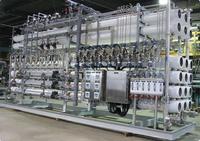
Investors looking for promising growth markets would do well to consider their water bill. Water’s artificially low price in most of the United States is one factor holding back innovative new water technologies, according to the report – but the time is right for change. Across the West, drought has left wide swaths of agricultural land brown, with massive wildfires raging through tinder-dry forests, residential wells tapped out and unemployed farm workers crowding food pantries. The drought is projected to cost the agricultural sector about $2.2 billion in 2014. The social and ecological damage is also profound. Technological innovation in the water sector could bring a raft of benefits ranging from the conservation of scarce water supplies to the expansion of water supplies through technologies that recycle or desalinate, for example.
-
-
Nuclear powerU.S. loses clean electricity as nuclear power plants keep closing
Four nuclear power plants, sources of low-emissions electricity, have announced closings this year. The main reason: the increasing availability of cheap natural gas as a result of fracking. If plants continue to shut down instead of extending operations, the United States risks losing 60 percent of its clean electricity starting in 2030, according to a new report by the American Physical Society (APS). The APS calls on socially responsible investors to encourage utilities to consider carbon emissions in business decisions.
-
-
BusinessFinancial decision making, risk taking in the face of changing climate
Maximizing returns on financial investments depends on accurately understanding and effectively accounting for weather and climate risks, according to a new study by the American Meteorological Society. An AMS report concludes that financial investments face a range of risks due to existing weather patterns and climate variability and climate change. Even small changes in weather can impact operations in critical economic sectors. At the same time, climate variability and change can either exacerbate existing risks or cause new sources of risk to emerge.
-
-
High-tech economyHigh tech more effective than tax climate in driving states' economic growth
Race-to-the-top policies are generally defined as those involving investments in education, entrepreneurship, and infrastructure; race-to-the-bottom policies involve competition among the states for jobs by using lower taxes and industrial recruitment incentives; researchers find that states with more technology classes in school, higher domain name registrations, and more people online tended to economically outperform states with a lower emphasis on technology
-
-
Aviation securityMilestone: Trusted Traveler reaches million members
U.S. Customs and Border Protection (CBP) said the agency’s Trusted Traveler Programs have reached one million members; Trusted Traveler Programs include Global Entry, NEXUS, SENTRI, and FAST
-
-
Law enforcement technologyIdentifying the criminals among multiple DNA samples
Providing certainty without a reasonable doubt is not possible when the DNA at a crime scene comes from multiple sources; this happens in about one in ten cases, meaning that important evidence for putting a criminal behind bars is lost; a new technique takes the uncertainty out of DNA samples, when more than one person’s DNA fingerprint is in the mix
-
-
Energy futuresOil will run dry before substitutes roll out: study
At the current pace of research and development, global oil will run out ninety years before replacement technologies; the authors of the new study say the findings are a warning that current renewable-fuel targets are not ambitious enough to prevent harm to society, economic development and natural ecosystems
-
-
TrendAngel investors flee seed and start-up stage in first half of 2010
Angel investors committed fewer dollars in more deals in the first half of 2010, with seed and start-up stage investing declining to its lowest level in several years, a trend that soon could impact new ventures and job creation; total investments in the first half of 2010 were $8.5 billion, a decrease of 6.5 percent over the first half of 2009
-
-
Aviation security / biometricsSix years later, U.S. pilot's licenses still not secure
In 2004 Congress told the Federal Aviation Administration (FAA) to come up with a pilot’s license that included the pilot’s photo and could contain biometric information like fingerprints or iris scans; critics charge that today, the only pilots pictured on FAA licenses are flight pioneers Wilbur and Orville Wright, and the licenses lack biometric data
-
-
TSA looks for commercial software to manage Secure Flight
Managing the long — very long — No Fly and Terror Watch lists is not a simple task; TSA is looking to purchase commercial software to help manage its Secure Flight program which checks the information airlines collect about passengers against DHS terrorist watch lists
-
-
Michigan's billion-dollar experiment in diversifying state's economy yields mixed results
In 2006 Michigan embarked on a bold experiment to save its economy: making loans to fledgling companies, investing money in venture capital firms and awarding millions in grants to university professors and nonprofit groups; the project’s record is mixed, and some of the goals are yet to be achieved, but supporters say it is too early to judge the results
-

- All
- Regional
- Water
- Biometrics
- Borders/Immig
- Business
- Cybersecurity
- Detection
- Disasters
- Government
- Infrastructure
- International
- Public health
- Public Safety
- Communication interoperabillity
- Emergency services
- Emergency medical services
- Fire
- First response
- IEDs
- Law Enforcement
- Law Enforcement Technology
- Military technology
- Nonlethal weapons
- Nuclear weapons
- Personal protection equipment
- Police
- Notification /alert systems
- Situational awareness
- Weapons systems
- Sci-Tech
- Sector Reports
- Surveillance
- Transportation
Advertising & Marketing: advertise@newswirepubs.com
Editorial: editor@newswirepubs.com
General: info@newswirepubs.com
2010-2011 © News Wire Publications, LLC News Wire Publications, LLC
220 Old Country Road | Suite 200 | Mineola | New York | 11501
Permissions and Policies
Editorial: editor@newswirepubs.com
General: info@newswirepubs.com
2010-2011 © News Wire Publications, LLC News Wire Publications, LLC
220 Old Country Road | Suite 200 | Mineola | New York | 11501
Permissions and Policies