
-
Enhanced geothermal energyNew approach would boost use of geothermal energy
Existing U.S. geothermal power plants generate up to 3.4 gigawatts of energy, making up about 0.4 percent of the nation’s energy supply. Geothermal power is generated by tapping the heat that exists under the Earth’s surface to extract steam and turn power plant turbines. Conventional geothermal power plants rely on the natural presence of three things: underground water, porous rock, and heat. A new approach to geothermal power, called enhanced geothermal systems, pumps fluids underground, a step which is called “reservoir stimulation,” to enable power production where conventional geothermal doesn’t work. It is estimated that enhanced geothermal systems could boost U.S. geothermal energy output 30-fold to more than 100 gigawatts, or enough to power 100 million typical American homes.
-
-
EnergyCutting carbon emissions more than pays for itself with savings on health care spending
Just how large are the health benefits of cleaner air in comparison to the costs of reducing carbon emissions? MIT researchers looked at three policies achieving the same reductions in the United States, and found that the savings on health care spending and other costs related to illness can be big — in some cases, more than ten times the cost of policy implementation. The concluded that savings from healthier air can make up for some or all of the cost of carbon-reduction policies.
-
-
HazmatU.S. takes action against tank car loaders for mislabeling hazardous cargo
One of the charges against Montreal Maine & Atlantic Railway (MMAR), the rail carrier operating the train which exploded in the small city of Lac- Mégantic, Quebec in July 2013, was that it mislabeled the cargo, claiming it to be less hazardous than it was. The mislabeling and downgrading of the contents of the cars allowed to company to take less rigorous security measures to secure the cars without appearing to break the law. The U.S. Department of Transportation (DOT) is moving against other carriers who mislabel the contents of their cargo to avoid the cost of required security measures.
-
-
Oil spillsTracking spilled oil
A newly developed computer model holds the promise of helping scientists track and predict where oil will go after a spill, sometimes years later. Scientists developed the model as a way of tracking the movement of sand and oil found along the Gulf of Mexico since the Deepwater Horizon oil spill. The new tool can help guide clean-up efforts, and be used to aid the response to future oil spills.
-
-
EnergyHarnessing solar energy during day for use at night
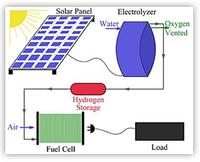
In one hour, the sun puts out enough energy to power every vehicle, factory, and device on the planet for an entire year. Solar panels can harness that energy to generate electricity during the day. The problem with the sun, however, is that it goes down at night — and with it the ability to power our homes and cars. If solar energy is going to have a shot at being a clean source of powering the planet, scientists had to figure out how to store it for night-time use. Researchers have built a system that converts the sun’s energy not into electricity but hydrogen fuel and stores it for later use, allowing us to power our devices long after the sun goes down.
-
-
Infrastructure protectionAbandoned mine offers clues about permanent CO2 sequestration
Power plants and other industries are responsible for more than 60 percent of global CO2 emissions, according to the International Energy Agency. Sequestering the CO2 in magnesite deposits would prevent the gas from entering the atmosphere and warming the planet. Stanford University researchers, studyingveins of pure magnesium carbonate, or magnesite — a chalky mineral made of carbon dioxide (CO2) and magnesium – in an abandoned mine in the Red Mountain, propose a novel technique for converting CO2 into solid magnesite, making CO2 sequestration feasible.
-
-
EnergyNovel nanosized antenna arrays key to effective harvesting of solar energy
For years, scientists have studied the potential benefits of a new branch of solar energy technology that relies on incredibly small nanosized antenna arrays that are theoretically capable of harvesting more than 70 percent of the sun’s electromagnetic radiation and simultaneously converting it into usable electric power. A novel fabrication technique could provide the breakthrough technology scientists have been looking for to improve today’s solar energy systems.
-
-
Rare Earth elementsHonda to reuse rare Earth metals from used parts

Rare Earth elements are essential to advanced technological application and to green technology products; China controls 97 percent of the world’s production of these elements, and has been using its near-monopoly to hobble non-Chinese companies and for political blackmail; in response, two Japanese companies announce a new process allowing them to extract as much as 80 percent or more of rare Earth metals contained in used nickel-metal hydride batteries
-
-
EnergyResearchers use electricity to generate alternative fuel
Scientists show that we can use electricity to power our cars — even if these cars are not electric vehicles; the researchers demonstrated a method for converting carbon dioxide into liquid fuel isobutanol using electricity
-
-
Nuclear powerA long-term low carbon energy strategy is essential for a prosperous U.K.
An urgent remodeling of the U.K. energy infrastructure is vital if the country wants to decarbonize without “the lights going out” and not be reliant on imported energy supplies, says a new report
-
-
Nuclear fusionNational Academies calls for expanded nuclear-fusion research
A report out on Wednesday from the National Academies says university researchers studying nuclear fusion still have a long way to go before overcoming the many scientific hurdles to the commercial generation of what is hoped to be a virtually limitless supply of energy
-
-
WaterStudy: No direct link between fracking, groundwater contamination
Hydraulic fracturing (fracking) involves the high-pressure injection of water, sand and chemicals into a shale seam, which causes the rock to shatter, releasing natural gas; preliminary findings from a study on the use of hydraulic fracturing in shale gas development suggest no direct link to reports of groundwater contamination
-
-
Energy futuresCost-effective way to produce solar thermal hydrogen fuel developed
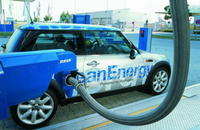
The U.S. Department of Energy is investigating novel approaches for solar thermochemical water splitting — that is, splitting water into its gaseous components, hydrogen and oxygen — to produce hydrogen, with the eventual goal of commercializing production; DOE’s cost targets set hydrogen production in 2015 at $6 per kilogram and hydrogen delivery in 2025 at $2 to $3 per kilogram.; and innovative technology, using thin-film metal ferrite process, developed by University of Colorado Boulder researchers is projected to meet both benchmarks
-
-
California roads to generate renewable energy
California lawmakers recently passed a bill for a pilot program that would turn road vibrations into energy; the bill proposes using a process called piezoelectric generation that captures energy from cars, trains, or people as they move across surfaces and create vibrations; these vibrations are then harnessed and converted into energy by piezoelectric materials that would be buried beneath the road’s surface; a .6 single lane road can prove as much as forty-four megawatts of energy each year, which is enough to light up more than 30,000 homes
-
-
Recent major natural gas explosions could have been prevented
Last month, after a series of deadly accidents, the National Transportation Safety Board (NTSB) conducted hearings on the status of U.S. natural gas pipelines and found that utilities have long resisted implementing recommended safety measures leading to the increased likelihood of fatal explosions; the United States currently has more than 210 natural gas pipeline systems with roughly 21,000 miles of pipeline snaking throughout heavily populated areas; some of these pipes were first put in place more than eighty years ago; utilities could have minimized the damage caused by the recent explosions and even prevented the accidents from occurring had they installed safety valves, conducted regular testing, and replaced aging infrastructure
-

- All
- Regional
- Water
- Biometrics
- Borders/Immig
- Business
- Cybersecurity
- Detection
- Disasters
- Government
- Infrastructure
- International
- Public health
- Public Safety
- Communication interoperabillity
- Emergency services
- Emergency medical services
- Fire
- First response
- IEDs
- Law Enforcement
- Law Enforcement Technology
- Military technology
- Nonlethal weapons
- Nuclear weapons
- Personal protection equipment
- Police
- Notification /alert systems
- Situational awareness
- Weapons systems
- Sci-Tech
- Sector Reports
- Surveillance
- Transportation
Advertising & Marketing: advertise@newswirepubs.com
Editorial: editor@newswirepubs.com
General: info@newswirepubs.com
2010-2011 © News Wire Publications, LLC News Wire Publications, LLC
220 Old Country Road | Suite 200 | Mineola | New York | 11501
Permissions and Policies
Editorial: editor@newswirepubs.com
General: info@newswirepubs.com
2010-2011 © News Wire Publications, LLC News Wire Publications, LLC
220 Old Country Road | Suite 200 | Mineola | New York | 11501
Permissions and Policies