
-
Homeland security educationPenn Stater is first in family to earn masters degree

Isiah Jones of Harrisburg will receive a master’s degree in Homeland Security-Information Security and Forensics, which he earned online through Penn State’s World Campus; the Penn State World Campus specializes in adult online education, delivering more than eighty of Penn State’s most highly regarded graduate, undergraduate, and professional education programs through online formats
-
-
Cyber educationNew program to educate next generation of U.S. cybersecurity specialists
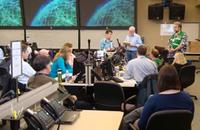
University of Maryland and Northrop Grumman create a cybersecurity honors program for undergraduates; the program, Advanced Cybersecurity Experience for Students (ACES), will immerse undergraduate students in all aspects of the field to meet growing manpower needs in the nation and the State of Maryland
-
-
EducationSubstantial growth in graduate enrollment in science, engineering in U.S. in the past decade
Graduate enrollment in science and engineering in the United States grew substantially in the past decade; approximately 632,700 graduate students were enrolled in science, engineering, and health programs in the United States as of fall 2010; this was a 30 percent increase from 493,000 students in 2000
-
-
Groves of academeFaculty retention a major challenge for universities
New study shows men and women faculty retained at same rate; but median retention rate for all university professors is only eleven years; if a university hires 100 assistant professors tomorrow, in eleven years only fifty of them will still be at the school
-
-
MathematicsInflux of ex-Soviet mathematicians changed mathematics in U.S.
One of the little-noticed effects of the collapse of the Soviet Union in 1992 was the way in which math is studied and taught in the United States; Soviet mathematicians who came to the United States reduced the role of American mathematicians in certain specialties, and in some specialties the likelihood of a competing American mathematician producing a top research paper has declined
-
-
Homeland security educationWalden University offers M.S. in Emergency Management
The school says that this new online master’s degree program emphasizes key skills related to creating and implementing disaster prevention and response plans
-
-
CybersecurityUMD, Lunarline partner on cybersecurity
The University of Maryland Cybersecurity Center will partner with Lunarline Inc. on cybersecurity education, research, and technology development
-
-
Competitive degreesRight degree helps grads compete in DHS hiring boom
Even amid the economic downturn, students who graduate with degrees in homeland security can breathe a bit easier knowing that they are more likely to find jobs than their fellow graduates; the agency’s hiring boom is expected to continue over the next several years as more and more baby boomers in their 50s begin to retire
-
-
Tomorrow’s cyber employeesGovernment preps next generation of cybersecurity employees
With the increasingly critical role that technology plays in everyday lives and the growing threat of hackers, the U.S. government is actively working to educate the next generation of cybersecurity officials
-
-
Guest column // By Dennis PorterWhy law enforcement officers should earn a degree in homeland security
In a guest column, Dennis Porter, a former law enforcement officer with more than thirty years of experience, argues that it is critical for U.S. national security that members of the law enforcement community return to school to obtain degrees in homeland security; with counterterrorism becoming an increasingly more crucial duty for law enforcement officers, it is imperative that they have the skills and knowledge to effectively combat extremism
-
-
On-line degreesMost affordable online degrees in homeland security
According to a recent study, at $7,300 Fort Hays State University is the best place to earn your online Master’s degree in criminal justice if you are looking for a bargain; last week GetEducated.com, a publisher of online college rankings and reviews, released its rankings for the most affordable online degrees in homeland security, forensics, criminal justice, and security
-
-
Community collegesCommunity colleges invest in homeland security education
Since 9/11 community colleges have played an increased role in providing job training to those seeking careers in homeland security, intelligence, and disaster response
-
-
Cybersecurity trainingPace University launches new cybersecurity institute
Last week Pace University announced that it had launched a special institution aimed at helping the United States alleviate the critical shortage of cybersecurity professionals and secure the nation’s data networks
-
-
HackingMaking counter-hacking cool

NYU-Poly will, for the first time, open cyber security awareness week events on 11-12 November to student guests interested in digital privacy and security — not just the so-called “cyber ninjas” who qualified as national finalists in feats of digital forensics, ethical hacking, and research; the event is expected to attract up to 400 student finalists, professionals, academics, and guests
-
-
CybersecurityL-3, Virginia Tech in cybersecurity partnership
L-3 Communicationshas formed a cooperative partnership in cybersecurity research and development with Virginia Tech’s Ted and Karyn Hume Center for National Security and Technology; the company says that this new partnership will enhance L-3’s ability to deliver innovative national security solutions
-

- All
- Regional
- Water
- Biometrics
- Borders/Immig
- Business
- Cybersecurity
- Detection
- Disasters
- Government
- Infrastructure
- International
- Public health
- Public Safety
- Communication interoperabillity
- Emergency services
- Emergency medical services
- Fire
- First response
- IEDs
- Law Enforcement
- Law Enforcement Technology
- Military technology
- Nonlethal weapons
- Nuclear weapons
- Personal protection equipment
- Police
- Notification /alert systems
- Situational awareness
- Weapons systems
- Sci-Tech
- Sector Reports
- Surveillance
- Transportation
Advertising & Marketing: advertise@newswirepubs.com
Editorial: editor@newswirepubs.com
General: info@newswirepubs.com
2010-2011 © News Wire Publications, LLC News Wire Publications, LLC
220 Old Country Road | Suite 200 | Mineola | New York | 11501
Permissions and Policies
Editorial: editor@newswirepubs.com
General: info@newswirepubs.com
2010-2011 © News Wire Publications, LLC News Wire Publications, LLC
220 Old Country Road | Suite 200 | Mineola | New York | 11501
Permissions and Policies