
-
Nuclear heatRevolutionary Nuclear Heating Plant
A team of scientists has come up with a radical solution to heat cities using spent nuclear rods, which they say is cost-effective and greener than natural gas. As the EU moves away from coal, many are interested.
-
-
Infrastructure protectionYou want to report a pothole? There’s an app for that

The city of Boston offers residents a new app – Street Bump – which will automatically report potholes they encounter; all the driver has to do is install the app and place the smartphone on the dashboard or in the cup holder; the app uses the phone’s motion detector and GPS locator to report potholes
-
-
Searches and rescueStudying predator search patterns to improve human searches
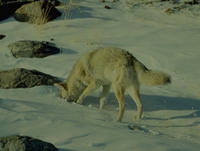
The inspiration for the next Google or search-and-rescue drone may spring from a seemingly unlikely source: Watching how animals sniff out food; innovators in everything from robotics to Internet search engines study patterns that animal predators walk while searching for prey; mathematical models which have been used in the past to study these patterns, however, are in need of a little revamping, researchers say — because in the animal kingdom, scent plays a major role in tracking prey
-
-
CyberwarNovel network model to help in cyberwarfare, conservation, and disease prevention
Computer networks are the battlefields in cyberwarfare, as exemplified by the U.S. recent use of computer viruses to attack Iran’s nuclear program; researchers develop a computer model which could help military strategists devise the most damaging cyber attacks as well as guard America’s critical infrastructure
-
-
PandemicsMeasuring the uncertainties of pandemic influenza

Researchers have highlighted three factors that could ultimately determine whether an outbreak of influenza becomes a serious epidemic that threatens national health; the research suggests that the numbers in current response plans could be out by a factor of two or more depending on the characteristics of the particular pandemic influenza
-
-
IntelligenceComputer-based methodology for cultural intelligence and security
Cultural differences are a major challenge facing intelligence agencies, researchers from Israel and the United States have developed computer-based methodology to improve knowledge, apply data, and better decipher these nuances and biases
-
-
Basketball mathematics NCAA tournament math: an alternative selection method
Researchers propose a math-based method for placing teams in the NCAA March Madness tournament – a method which will reduce team-travel distances in early rounds and which could reduce travel costs by $1 million while increasing attendance in the games
-
-
In the trenchesFlight control software helps pilots stick carrier landings

Navy and Marine Corps aviators conducting carrier landings today line up with a moving flight deck in a complicated process; they must constantly adjust their speed and manipulate the aircraft’s flight control surfaces — ailerons, rudders, and elevators — to maintain the proper glide path and alignment to the flight deck for an arrested landing; new software makes landing much easier
-
-
InfrastructureSpeeding skyscraper construction -- and making them stronger
Researchers are working on a new technique that could speed construction of skyscrapers while also providing enough stiffness and strength to withstand earthquakes and forces from high winds
-
-
DisastersTsunami-predicting software to help protect coastal communities
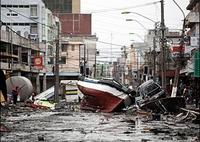
New software has been developed to help protect vulnerable coastal communities from the destruction of a tsunami; the mathematical model has created significant interest in the wake of the 2011 earthquake and tsunami in Japan six months ago
-
-
IEDsLaser device detects IEDs

Researchers have developed a laser that could detect roadside bombs — the deadliest enemy weapon U.S. and coalition soldiers encountered in Iraq and Afghanistan; the laser, which has comparable output to a simple presentation pointer, potentially has the sensitivity and selectivity to canvas large areas and detect improvised explosive devices
-
-
Flood predictionFlood prediction tech simulates rivers 100x faster than real time
Researchers have applied advanced analytics to river systems, weather, and sensor data, to predict the Guadalupe River’s behavior more than a hundred times the normal speed; simulating thousands of branches at a time, this technology could help provide up to several days warning of a flood, allowing more time for disaster prevention and preparedness
-
-
Law-enforcement technologyResearchers developing graffiti analysis app
Law enforcement officials could soon have an app for their mobile phones that allows them to snap a picture of gang graffiti and have its meaning translated; gangs often use graffiti as a way of communicating messages like challenges or warnings to rival gangs and understanding its meaning could help fight crime
-
-
Sharing risk assessmentsU.S., Canada to share hazard risk assessment software tool
Hazus, or “Hazards U.S.” is a risk assessment software tool for emergency management professionals that combines science, engineering, and geospatial information technology to estimate potential loss of life and property damage from disasters and natural hazards; FEMA is using it and now Canada will, too
-
-
In the trenchesAutonomous multi-target, multi-user tracking capability
An autonomous multi-sensor motion-tracking and interrogation system reduces the workload for analysts by automatically finding moving objects, then presenting high-resolution images of those objects with no human input
-

- All
- Regional
- Water
- Biometrics
- Borders/Immig
- Business
- Cybersecurity
- Detection
- Disasters
- Government
- Infrastructure
- International
- Public health
- Public Safety
- Communication interoperabillity
- Emergency services
- Emergency medical services
- Fire
- First response
- IEDs
- Law Enforcement
- Law Enforcement Technology
- Military technology
- Nonlethal weapons
- Nuclear weapons
- Personal protection equipment
- Police
- Notification /alert systems
- Situational awareness
- Weapons systems
- Sci-Tech
- Sector Reports
- Surveillance
- Transportation
Advertising & Marketing: advertise@newswirepubs.com
Editorial: editor@newswirepubs.com
General: info@newswirepubs.com
2010-2011 © News Wire Publications, LLC News Wire Publications, LLC
220 Old Country Road | Suite 200 | Mineola | New York | 11501
Permissions and Policies
Editorial: editor@newswirepubs.com
General: info@newswirepubs.com
2010-2011 © News Wire Publications, LLC News Wire Publications, LLC
220 Old Country Road | Suite 200 | Mineola | New York | 11501
Permissions and Policies