
-
Bubonic plagueOregon teen infected with bubonic plague
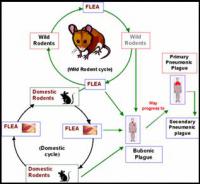
Health authorities in Crook County, Oregon, confirmed that a teenage girl has contracted bubonic plague from a flea while on a hunting trip. The girl became sick five days after the trip started on 16 October; and was rushed to a hospital in Bend, Oregon on 24 October.
-
-
Food safetyListeria pathogen is prevalent, persistent in retail delis: Study
Research shows that standard cleaning procedures in retail delis may not eradicate Listeria monocytogenes bacteria, which can cause a potentially fatal disease in people with vulnerable immune systems. A study found that 6.8 percent of samples taken in fifteen delis before daily operation had begun tested positive for L. monocytogenes. In a second sampling phase, 9.5 percent of samples taken in thirty delis during operation over six months tested positive for the bacteria. In twelve delis, the same subtypes of the bacteria cropped up in several of the monthly samplings, which could mean that L. monocytogenes can persist in growth niches over time.
-
-
Public healthInnovative solar-powered toilet to be unveiled in India next week

Unsafe methods to capture and treat human waste result in serious health problems and death — food and water tainted with pathogens from fecal matter results in the deaths of roughly 700,000 children each year. A revolutionary toilet fueled by the sun is being developed by University of Colorado Boulder researchers to help some of the 2.5 billion people around the world lacking safe and sustainable sanitation. It will be unveiled in India this month.
-
-
IEDsExposure to IED blasts increases risk of long-term health consequences
Blasts are the leading cause of death and injury on the battlefield, accounting for about 75 percent of all combat-related injuries in U.S. military personnel. U.S. soldiers exposed to blasts while deployed in Iraq and Afghanistan have an increased risk of developing adverse health outcomes over the long term, such as post-traumatic stress disorder (PTSD) and, in certain cases of traumatic brain injury (TBI), growth hormone deficiency, and persistent post-concussive symptoms including headaches, says a new report.
-
-
Public healthNorth Carolina brain surgery patients exposed to deadly disease
Officials at a North Carolina hospital last Tuesday notified eighteen patients that they might have been exposed to Creutzfeldt-Jakob disease (CJD), a degenerative brain disease which is always fatal and which makes those infected exhibit symptoms of dementia before they die. The eighteen patients had brain surgery performed on them since 18 January. A patient operated on that that day was subsequently tested positive for the disease. The hospital said that the surgical instruments used on the patient with CJD were sterilized, but were “not subjected to enhanced sterilization procedures.’
-
-
Nightmare bacteriaPatients infected with drug-resistant bacteria at suburban Chicago hospital
Health authorities in Illinois have placed a suburban Chicago hospital under tight scrutiny after an extremely rare strain of a dangerous drug-resistant strand of flu was found to be connected to a series of operations performed at the hospital. The Centers for Disease Control and Prevention (CDC) has discovered forty-four cases of Illinois patients infected with a particular bacteria, and thirty-eight of those individuals had all recently undergone an endoscopic procedure at Advocate Lutheran General Hospital, located in Park Ridge west of Chicago, in the past year.
-
-
Secret agentsJames Bond drank too much to perform at the level depicted in books, movies
A detailed examination of James Bond’s books shows that Bond’s weekly alcohol intake is over four times the recommended limit for an adult male, putting him at high risk of several alcohol related diseases, such as alcoholic liver disease, cirrhosis, impotence, and alcohol-induced tremor, and an early death. The medical team concluded that it would not be realistic to expect Bond to have the capacity to perform (in all aspects of life) at his high level of alcohol intake.
-
-
SuperbugsRapid detection of superbugs
Scientists developed an array that could test for 116 antibiotic resistant genes from one class of bacteria, and 90 resistant genes from the other class of bacteria. This new lab test detects antibiotic resistance genes quickly, helping doctors choose the right drugs to knock out superbugs.
-
-
Public healthHolograms to help in fighting malaria
Scientists have developed a 3D filming technique that could inform research to stem the spread of malaria. Creating moving digital holograms of malaria sperm has given researchers fresh insights into the behavior of these tiny life forms. Understanding how malaria parasites mate could pave the way for improved prevention and control of this deadly disease, which poses a threat to half of the world’s population.
-
-
HackingPhysicians feared terrorists might hack Dick Cheney’s cardiac defibrillator

In a 60 Minutes segment aired yesterday (Sunday), former vice-president Dick Cheney told the interviewer that his doctors turned off the wireless function of his implanted cardiac defibrillator (ICD) “in case a terrorist tried to send his heart a fatal shock.” Asked about the concern of Cheney’s physicians, electrophysiologists — these are the cardiologists who implant ICDs – say that as far as they know, this has never happened in the real world but that it is impossible to rule out the possibility.
-
-
Public healthFDA shuts down more than 1,500 online pharmacies

The U.S. Food and Drug Administration (FDA) and Interpol have shutdown 1,677 online pharmacies for selling counterfeit or substandard medication and selling drugs without the necessary safeguards.
-
-
Public healthSix out of ten people on Earth still lack access to flush toilets, adequate sanitation
It may be the twenty-first century, with all its technological marvels, but six out of every ten people on Earth still do not have access to flush toilets or other adequate sanitation — measures that protect the user and the surrounding community from harmful health effects — according to a new study.
-
-
FrackingFracking generates less wastewater per unit of gas, but more overall
Hydraulically fractured natural gas wells are producing less wastewater per unit of gas recovered than conventional wells would. The scale of fracking operations in the Marcellus shale region – which stretches from New York to Virginia and accounts for about 10 percent of all natural gas produced in the United States today — is so vast, however, that the wastewater it produces threatens to overwhelm the region’s wastewater disposal capacity.
-
-
WaterLarge amounts of antibacterial agent used in soaps found in freshwater lakes
When people wash their hands with antibacterial soap, most do not think about where the chemicals contained in that soap end up. A new study determined that the common antibacterial agent, called triclosan, used in soaps and many other products, is found in increasing amounts in several Minnesota freshwater lakes.
-
-
Public healthThousands at risk from dirty syringes used in clinics, hospitals
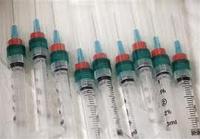
U.S. health officials are still fighting a battle which was supposed to be over more than fifty years ago: dirty needles (the disposable syringe became widely available in the early 1960s); in the last eleven years, more than 150,000 patients nationwide were victims of unsafe injections, and two-thirds of those injections have been administered since 2008
-

- All
- Regional
- Water
- Biometrics
- Borders/Immig
- Business
- Cybersecurity
- Detection
- Disasters
- Government
- Infrastructure
- International
- Public health
- Public Safety
- Communication interoperabillity
- Emergency services
- Emergency medical services
- Fire
- First response
- IEDs
- Law Enforcement
- Law Enforcement Technology
- Military technology
- Nonlethal weapons
- Nuclear weapons
- Personal protection equipment
- Police
- Notification /alert systems
- Situational awareness
- Weapons systems
- Sci-Tech
- Sector Reports
- Surveillance
- Transportation
Advertising & Marketing: advertise@newswirepubs.com
Editorial: editor@newswirepubs.com
General: info@newswirepubs.com
2010-2011 © News Wire Publications, LLC News Wire Publications, LLC
220 Old Country Road | Suite 200 | Mineola | New York | 11501
Permissions and Policies
Editorial: editor@newswirepubs.com
General: info@newswirepubs.com
2010-2011 © News Wire Publications, LLC News Wire Publications, LLC
220 Old Country Road | Suite 200 | Mineola | New York | 11501
Permissions and Policies