
-
Using ozone to kill prions dead
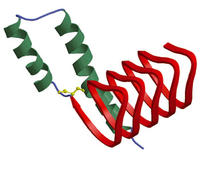
Prions are among the worst infectious-disease agents; these proteins are resistant to a wide variety of extreme disinfectant procedures; they have been identified as the culprits behind mad cow disease and chronic wasting disease in animals and humans, and are also implicated in Creutzfeldt-Jakob disease and other prion-related disorders
-
-
Scientists offer new information for fighting flu
Influenza is the world’s leading cause of morbidity and mortality; seasonal viruses affect up to 15 percent of the human population and cause severe illness in five million people a year; in the United States, financial losses caused by seasonal influenza are estimated to exceed $87 billion annually
-
-
Stealthy leprosy pathogen evades immune response
Leprosy, one of the world’s oldest known diseases, is a chronic infectious disease that affects the skin, the peripheral nerves, the upper respiratory tract, and the eyes and can lead to disfigurement of the hands, face, and feet; scientists’ findings point to new treatment pathways for leprosy – and other infectious diseases
-
-
U.S. drug shortages a threat to public health, patient care
Shortages in the United States of key drugs used to fight infections represent a public health emergency and can put patients at risk; frequent anti-infective shortages can substantially alter clinical care and may lead to worse outcomes for patients
-
-
New Ebola vaccine protects mice
An experimental vaccine against deadly Ebola hemorrhagic fever protected more than 80 percent of mice given a lethal dose of the virus, and may protect humans as well. Unlike previous experimental vaccines, the new vaccine, which is grown in tobacco plants, is also stable enough to stockpile in case of bioterrorism.
-
-
New wireless sensor quickly detects E. coli in water samples
Fecal contamination of public beaches caused by sewage overflow is both dangerous for swimmers and costly for state and local economies; current methods to detect E.coli, a bacterium highly indicative of the presence of fecal matter in water, typically require 24-48 hours to produce a result; new detection method cuts this time to 1-8 hours
-
-
Progress made toward a vaccine for Ebola
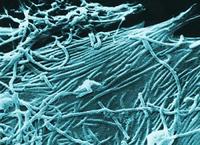
Ebola is one of the most lethal, naturally occurring pathogens on earth, killing up to 90 percent of its victims, and producing a terrifying constellation of symptoms known as hemorrhagic fever; scientists have now made significant progress toward a vaccine against the deadly virus – and this Ebola vaccine could be stockpiled for use in the United States, should the country fall victim to a natural outbreak or a bioterrorism event in which a weaponized strain of the virus were unleashed on soldiers or the public
-
-
Natural killer cells help human body fight off infections

Researchers have discovered a new type of cell which boosts the human body’s ability to fight off infections and life-threatening diseases; the researchers found a type of cell which recognizes lipid antigens, or foreign molecules, which sit on infectious bacteria which invade the body
-
-
New compound breaks down HIV's outer envelope
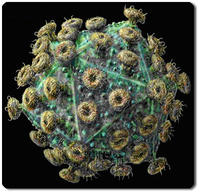
One of the reasons HIV is so difficult to treat is that it continually evolves the proteins on its membrane to increase its resistance to immune systems; researchers at Texas A&M University and the Scripps Research Institute have now discovered a compound which breaks down the outer envelope of HIV
-
-
CDC concludes NBA outbreak investigation
A recently concluded investigation by the Centers for Disease Control and Prevention (CDC) reveals that norovirus was the cause of an outbreak that sidelined more than twenty-four NBA players and staff members from thirteen teams in 2010
-
-
Schools help spot disease outbreaks early
Local public health authorities in Canada are teaming up with schools to develop an early warning disease tracking system; in an effort to spot potential disease outbreaks before they occur, health officials in Peel, Canada are monitoring school absenteeism and emergency department visits
-
-
Jefferson County tests flu pandemic vaccination capabilities
Local public health authorities in Jefferson County, New York are currently testing their ability to administer large quantities of flu vaccines in the event of a pandemic by offering to inoculate its residents for free
-
-
Flu shots not effective enough in global outbreak, report finds
A new study reveals that seasonal flu shots are not effective enough to protect people in the event of a pandemic; “Today’s flu shot is like an iPhone 1.0,” said the study’s author, Dr. Michael Osterholm, the director of the Center of Excellence for Influenza Research and Surveillance at the University of Minnesota; “What we need is an iPhone 10.0”
-
-
Google Earth typhoid maps traces disease outbreaks
Recent advances in DNA sequencing have allowed scientists accurately to track the spread of some diseases by measuring mutations in the pathogen’s DNA when the DNA replicates; tracing the spread of typhoid, however, has proved challenging because these mutations are small in number and not detectable by most techniques in use
-
-
Elusive killer parasite being traced in Peru
Chagas disease, primarily seen in South America, Central America, and Mexico, is the most deadly parasitic disease in the Americas; Penn epidemiological study takes snap shot of long-term Chagas disease outbreak
-

- All
- Regional
- Water
- Biometrics
- Borders/Immig
- Business
- Cybersecurity
- Detection
- Disasters
- Government
- Infrastructure
- International
- Public health
- Public Safety
- Communication interoperabillity
- Emergency services
- Emergency medical services
- Fire
- First response
- IEDs
- Law Enforcement
- Law Enforcement Technology
- Military technology
- Nonlethal weapons
- Nuclear weapons
- Personal protection equipment
- Police
- Notification /alert systems
- Situational awareness
- Weapons systems
- Sci-Tech
- Sector Reports
- Surveillance
- Transportation
Advertising & Marketing: advertise@newswirepubs.com
Editorial: editor@newswirepubs.com
General: info@newswirepubs.com
2010-2011 © News Wire Publications, LLC News Wire Publications, LLC
220 Old Country Road | Suite 200 | Mineola | New York | 11501
Permissions and Policies
Editorial: editor@newswirepubs.com
General: info@newswirepubs.com
2010-2011 © News Wire Publications, LLC News Wire Publications, LLC
220 Old Country Road | Suite 200 | Mineola | New York | 11501
Permissions and Policies