
-
Tennessee considers ways to raise money for homeland security
A 2011 bill gave the Tennessee government the ability to revoke the license of anyone in the state who did not pay criminal fines and court costs. Lawmakers originally hoped the law would bring millions of dollars in reinstatement fees, money which would be directed to the Tennessee Department of Safety and Homeland Security. Only nine counties are complying with the law by notifying the state of violators, and so far the state had collected just $22,425.
-
-
Computers, data help police prevent violence
As cities across America work to reduce violence in tight budget times, new research shows how they might be able to target their efforts and police attention — with the help of high-powered computers and loads of data. These computers offer detailed analysis of drugs, alcohol, and crimes across a city, helping target crime prevention.
-
-
Battle-tested technologies no employed by the police
Technologies employed in the wars in Iraq and Afghanistan are now hitting local streets across the United States, changing how local law enforcement investigates crimes by focusing on where crimes are most likely to happen instead of where a crime has taken place.
-
-
New explosives vapor detection technology
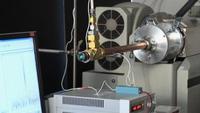
Novel explosives detection method focuses on direct, real-time vapor detection rather than collection of explosives particles. It could change paradigm for explosives screening.
-
-
Ohio country authorized to use drones to look for missing persons
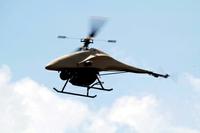
The Medina County, Ohio, Sheriff’s Office has recently been authorized to fly drones on police missions. Tom Miller, the county’s new sheriff, said the drones will be used specifically for looking for missing people or suspect who may be hiding in the woods.
-
-
Seattle mayor says no to drones
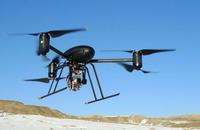
Seattle mayor Mike McGinn has shut down the Seattle Police Department’s drone program before it started. McGinn said the police need to stay focused on “community building.” The announcement came just one day after the city held a public hearing to discuss restrictions to be imposed on drone use by the police departments. Many citizens voiced their concerns about possible violations of privacy.
-
-
DHS grant to fund technology for tracking mobile devices
The University Of Alabama at Birmingham(UAB) has been given a $583,000 grant from the Department of Homeland Securityto build a system for verifying the location history and chorological track of cell phones and smart phones, tablets, and other mobile devices. The system being built could also be used to eliminate contest fraud, verify the origin of sea food, and protect national security.
-
-
Florida restricts the use of drones by law enforcement agencies
States continue to restrict the use of drones by law enforcement agencies. Florida police agencies wanted state lawmakers to make a special exception in a bill which bans the use of UAVs by law enforcement, so that drones could be used for crowd control. The bill, however, won the approval of the Senate Community Affairs Committee without the exception.
-
-
More states consider laws to limit the use of drones by police
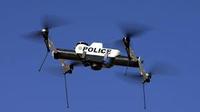
The Federal Aviation Administration (FAA) appears ready to allow the use of drones in the United States, by both law enforcement agencies and private citizens, almost with no restrictions. Experts predict that by the end of the decade, there will be about 30,000 drones flying over the United States. Legislators in at least eleven states want to impose limits on the use of UAVs as worries grow that the unregulated use of drones would erode the liberties of Americans.
-
-
Tight money hampers Detroit police
A non-profit data sharing consortium approached the Detroit Police Department last summer to see whether the department would like to join the consortium’s regional system and share technology that would allow the department effectively to put hundreds of officer back on to the streets. Joining the Courts and Law Enforcement Management Information System (CLEMIS) would have cost the city $1.2 million a year, which the city says it cannot afford.
-
-
Georgia police gets military-grade weapons
Metro Atlanta police departments and sheriff’s offices have recently acquired some new toys which include armored trucks, grenade launchers, and personnel carriers. According to the Georgia Department of Public Safety, $200 million in military equipment and weapons are owned by 600 Georgia law enforcement agencies. This military grade equipment has some people concerned as to why local law enforcement agencies are so heavily armed.
-
-
Google wants to limit law enforcement’s access to e-mails, users’ information
In 2012 Google received 16,407 requests for user data, which affected 31,072 users or accounts. More than half of the requests were accompanied with a subpoena, the others were not. Google is planning on lobbying Washington this year to persuade lawmakers that they should make it harder for law enforcement to gain access to e-mails and other digital messages.
-
-
New Hampshire bill would limit searches, expand expectation of privacy

New Hampshire State Representative Neal Kurk ® says state residents do not expect,when they throw something out in their trash or leave a drinking glass with their saliva on it at a public place, that law enforcement, insurance companies, or data miners would use the trash left behind to glean personally identifiable information.
-
-
Biometric workshop studied voice, dental, oral standards
The National Institute of Standards and Technology (NIST) hosted a workshop to discuss proposed supplements to the biometric data format standard that support voice recognition, dental and oral data, disaster victim identification, and special data needs for mobile ID applications.
-
-
Laser scanner documents crimes scenes quickly, accurately
The Carlsbad, California police is using a new laser scanner to capture what happened at crime scene. Thenew technology cuts the time it takes to document a crime scene, from the size of the room to the bullet holes in the wall, by up to 80 percent.
-

- All
- Regional
- Water
- Biometrics
- Borders/Immig
- Business
- Cybersecurity
- Detection
- Disasters
- Government
- Infrastructure
- International
- Public health
- Public Safety
- Communication interoperabillity
- Emergency services
- Emergency medical services
- Fire
- First response
- IEDs
- Law Enforcement
- Law Enforcement Technology
- Military technology
- Nonlethal weapons
- Nuclear weapons
- Personal protection equipment
- Police
- Notification /alert systems
- Situational awareness
- Weapons systems
- Sci-Tech
- Sector Reports
- Surveillance
- Transportation
Advertising & Marketing: advertise@newswirepubs.com
Editorial: editor@newswirepubs.com
General: info@newswirepubs.com
2010-2011 © News Wire Publications, LLC News Wire Publications, LLC
220 Old Country Road | Suite 200 | Mineola | New York | 11501
Permissions and Policies
Editorial: editor@newswirepubs.com
General: info@newswirepubs.com
2010-2011 © News Wire Publications, LLC News Wire Publications, LLC
220 Old Country Road | Suite 200 | Mineola | New York | 11501
Permissions and Policies