
-
Nebraska lawmakers look to limit police drone use
The Federal Aviation Administration says there will be around 30,000 commercial and government drones flying over the United States in the next ten years. The business of selling and servicing domestic drones is projected to grow into a $90 billion industry. Lawmakers at the federal and state level say that to prevent these drone from encroaching on citizens’ privacy, it is time to define what they can do, where, and when.
-
-
Feds to fund DNA collection from suspects
Wisconsin governor Scott Walker has revealed a plan to collect DNA from suspects upon arrest, and while Republicans who support the plan look for ways to fund it, some of the money could come from Congress.
-
-
Police depts. reviews policy on retaining data from license plate readers
License plate readers (LPRs) have been used more and more by law enforcement agencies across the United States, but as they gain popularity in law enforcement, they have become the subject of debate, and concern, in many local governments.
-
-
Instant DNA analysis worries privacy advocates
In the past, it took weeks to analyze a person’s DNA, but with new technology it can take less than a day, and in most cases less than two hours; Rapid DNA analyzers can process a DN sample in less than ninety minutes; these machines, the size of a household printer, are now being marketed to local, state, and federal law enforcement agencies around the country; privacy advocates worry
-
-
Portable X-ray source offers a mobile terrorism prevention tool
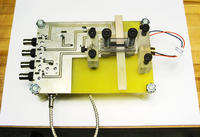
The hand-held scanners, or tricorders, of the Star Trek movies and television series are one step closer to reality now that a engineers have invented a compact source of X-rays and other forms of radiation; the radiation source, which is the size of a stick of gum, could be used to create inexpensive and portable X-ray scanners for use by doctors, as well as to fight terrorism and smuggling and aid exploration on this planet and others
-
-
Helicopter monitors radiation levels in Washington, D.C.
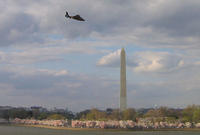
For the last week, a National Nuclear Security Administration (NNSA) helicopter has been flying over Washington, D.C., measuring naturally occurring radiation levels; the purpose is to establish a baseline of radiation levels so that abnormal spikes – occurring, for example, as a result of exploding a dirty bomb — may be readily detected
-
-
Less-lethal 12-gauge shotgun round for law enforcement unveiled
Innovative new round flattens, or “pancakes,” across a subject’s body on impact rather than keeping its shape as other rounds do
-
-
Privately funded gun buy-back programs proliferate
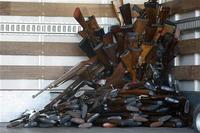
In the aftermath of the Connecticut mass shooting, private donors have donated hundreds of thousands of dollars to cities around the United States to fund gun buy-back programs; thousands of guns – and two rocket launchers – have been collected, but the impact on a gun-saturated society is likely to be small: this year alone the FBI has recorded 16.8 million instant background checks of gun buyers, 400,000 more than last year, which was a record year
-
-
Proliferation of license plate readers worry privacy advocates
Automated License Plate Recognition (ALPR) technology has taken off in recent years, and the police says it is the greatest innovation since fingerprints and DNA; the technology has changed the way police finds cars connected to crimes, but in the process it has upset many privacy advocates
-
-
Louisiana parishes to encrypt police radio communication
First-responder agencies in Orleans, Jefferson, St. Bernard, and Plaquemines parishes in Louisiana will soon be encrypting all emergency radios, keeping emergency response chatter out of the ears of the public; the police says the encrypted communication is needed in order to keep criminals from gaining information on police by listening to scanners, but a police union and crime-prevention groups are worried that the encrypted system would prevent the media from monitoring police activity, and hobble neighborhood watch organizations from keeping their neighborhoods safe
-
-
Downloadable, printable gun technology may change gun-ownership landscape
An Austin, Texas-based Defense Distributed says its mission is to create the WikiWeapon: a downloadable Internet file which will allow users to print their gun on a 3D printer; when the development process is complete, “any person has near-instant access to a firearm through the Internet,” the company says;the company adds: “This project might change the way we think about gun control and consumption. How do governments behave if they must one day operate on the assumption that any and every citizen has near instant access to a firearm through the Internet? Let’s find out”
-
-
Major surveillance law heading toward its own end-of-year cliff

While coverage of the tense negotiations over a resolution to the fiscal cliff threat has dominated the media, the Foreign Intelligence Surveillance Amendments of 2008 is heading for a cliff of its own, as the provisions of the act are set to expire at the end of the year
-
-
Army engineers develop new roadway threat detection system
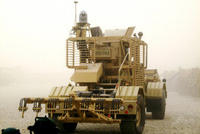
Explosives along roadways remain an unrelenting hazard for deployed soldiers; U.S. Army engineers have developed a system for detecting possible threats by identifying potential threat locations on unimproved roads; the system can perform region of interest cueing of threats at greater standoff distances, which can be further interrogated by the radar as the vehicle gets closer to the threat
-
-
Seattle debates use of drones by police
The debate between law enforcement and privacy advocates over the use of UAVs is now taking place in Seattle; since President Obama signed a bill in February pushing the Federal Aviation Administration (FAA) to allow the use of civilian drones in America by 2015, many law enforcement agencies have been preparing to use drones
-
-
Privacy advocates succeed in delaying drone purchase by California country sheriff
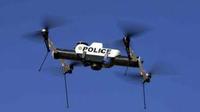
Congress earlier this year passed legislation earlier this year ordering the Federal Aviation Administration (FAA) to accelerate the approval of the use of unmanned aerial vehicles (UAVs) for law enforcement and other domestic purposes, and, law enforcement agencies around the country are moving to purchase drones; Alameda Country, California planned to buy a drone, but action by the ACLU and the Electronic Frontier Foundation forced the county to hold a public hearing on drone use and formulate guideless for, and set limits on, drone use by police
-

- All
- Regional
- Water
- Biometrics
- Borders/Immig
- Business
- Cybersecurity
- Detection
- Disasters
- Government
- Infrastructure
- International
- Public health
- Public Safety
- Communication interoperabillity
- Emergency services
- Emergency medical services
- Fire
- First response
- IEDs
- Law Enforcement
- Law Enforcement Technology
- Military technology
- Nonlethal weapons
- Nuclear weapons
- Personal protection equipment
- Police
- Notification /alert systems
- Situational awareness
- Weapons systems
- Sci-Tech
- Sector Reports
- Surveillance
- Transportation
Advertising & Marketing: advertise@newswirepubs.com
Editorial: editor@newswirepubs.com
General: info@newswirepubs.com
2010-2011 © News Wire Publications, LLC News Wire Publications, LLC
220 Old Country Road | Suite 200 | Mineola | New York | 11501
Permissions and Policies
Editorial: editor@newswirepubs.com
General: info@newswirepubs.com
2010-2011 © News Wire Publications, LLC News Wire Publications, LLC
220 Old Country Road | Suite 200 | Mineola | New York | 11501
Permissions and Policies