
-
Technology emulates the Blind Cave Fish to help underwater vessels navigate with ease
Scientists have invented a “sense-ational” device, similar to a string of feelers found on the bodies of the Blind Cave Fish, which enables the fish to sense their surrounding and so navigate easily; using a combination of water pressure and computer vision technology, the sensory device is able to give users a 3-D image of nearby objects and map its surroundings
-
-
Technique used to nab serial killers helps in controlling pests and disease and in counter-terrorism
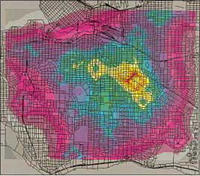
A technique designed to help criminologists catch serial killers is being used by scientists to locate sources of disease, control pests, and study animal behavior; locating a serial killer’s home is similar to finding the nests of animals or centers of disease outbreaks; ecological approaches have applications in counter-terrorism work, as terrorist cells tend to have more than one anchor point within the area in which they operate, exactly so they can avoid detection
-
-
Detecting tunnels -- used to smuggle drugs, weapons, or people – is not easy
It seems reasonable to assume that it would be easy to use seismic waves to find tunnels dug by smugglers of drugs, weapons, or people, but this assumption is wrong; scientists are trying to get a better look at the ground around tunnels to learn why seismic data finds some tunnels but not others – and come up with a seismic detection process for the border and other areas where tunnels pose a security threat
-
-
CBP wants more drones, but lawmakers want more details about their use
The U.S. Customs and Border Protection (CBP) wants to have a fleet of twenty-four drones to patrol the northern and southern borders of the United States, but Congress has yet to appropriate funding beyond the first ten drones; so far in 2012, drones have been credited with leading to more arrests and drug seizures than ever before, but their contribution is still small
-
-
More police departments make officers wear headcams

The Salt Lake Police Department is following other law enforcement agencies by having officers wear headgear with cameras attached; a police chief in Salt Lake is taking it one step further by announcing his intention to make the cameras mandatory at his department; this would allow police officers in Salt Lake to record any crime or interaction with the public
-
-
Soon ballistic armor may be made of wood
By processing cellulose further than has been the case to date, it is possible to extract cellulose nanocrystals (CNC) fibrils with tremendous tensile strength; since soft body armor has been available for police for about forty years, few pay attention to developments in this industry, but it was not too long ago that a plain vanilla Level II vest without a trauma plate was almost as bulky as the external body armor the military presently uses.
-
-
New smartphone app for crime tips
Howard County, Maryland police announced Monday that the department has launched a new smartphone app allowing residents anonymously to send crime tips by text, e-mail, photo, or video, according to a police news release. Howard County police are the first jurisdiction in Maryland to install the technology, which is called iWatch.
-
-
Private drone taking off in U.S.
When HobbyTown USA first began selling drones a couple years ago, they only had one or two customers inquiring about them. Now, however, with people finding real-world applications for the small pilotless aircrafts, people are coming in and asking about them much more regularly, according to Elliot.Real estate agents in the area are using drones to photograph their vineyard properties, police and fire departments are experimenting with drones for patrolling and, of course, the hobbyist is fueling the commercial push said Elliot, who added that the market is growing rapidly. He pointed out that his drone customer list has grown from one to 12 in the last two years.
-
-
Hiding communication from government, law-enforcement snooping
In response to increasing government and law-enforcement snooping, companies such as San Francisco’s Wickr are attempting to build traceless communications systems. The idea is to build the encryption into the actual message — rather than on the servers of the messaging provider — so no one other than the recipients can see what is being communicated. Right now Wickr works only on text messaging, but the company plans to extend its encryption services to e-mail and even social networks.
-
-
Police uses specially equipped tablets to nab thieves
Dayton, Ohio Police officers are using a local software company’s technology to catch thieves and are reporting some success after several years of development. Detectives launched an ongoing operation in the Oregon District this weekend that utilizes specially equipped tablets to lure and then track thieves. They made two arrests in the first twenty-four hours of the operation.
-
-
U.S. skies may soon be open to drones
Unmanned drones are cheaper than manned aircraft and can be used in a variety of ways, such as assessing environmental threats and damage from natural disaster, tracking criminals trying to escape on a highway, and assessing wildfires; according to an FAA prediction, 30,000 drones could be flying in the United States in less than twenty years; lawmakers and privacy advocates want the use of these drones more tightly regulated
-
-
Improved technology to detect hazardous chemicals
Scientists have developed a system quickly to detect trace amounts of illegal drugs, explosives, pollutants in rivers, or nerve gases released into the air; the new system can pick out a single target molecule from 10,000 trillion water molecules within milliseconds, by trapping it on a self-assembling single layer of gold nanoparticles
-
-
Arizona police departments test shirt-worn, high-tech cameras
Two police departments in Arizona – Surprise and Peoria — are testing several brands of high-tech cameras that attach to an officer’s shirt; police in Mesa, Arizona used about fifty cameras for a 1-year study; the Phoenix Police Department plans on using the cameras full-time starting early next year; privacy and civil-liberties experts say the cameras can be used in a positive way, but that there needs to be a clear baseline of rules when it comes to how and when the cameras are used
-
-
Nanotech detection device emulates dog's nose to detect explosives
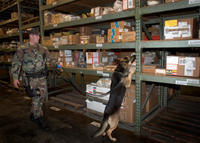
Inspired by the biology of canine scent receptors, scientists develop a chip capable of quickly identifying trace amounts of vapor molecules; the chip is part of a device which is both highly sensitive to trace amounts of certain vapor molecules, and able to tell a specific substance apart from similar molecules
-
-
License plate scanners in Canada under fire from privacy commissioners
British Columbia’s privacy commissioner is not happy about the way police departments are using their license-plate scanners; in a report released last week, Commissioner Elizabeth Denham said changes must be made to the Victoria police department’s Automated License Plate Recognition Program (ALPR), after it was discovered that the program could be used as a surveillance tool
-

- All
- Regional
- Water
- Biometrics
- Borders/Immig
- Business
- Cybersecurity
- Detection
- Disasters
- Government
- Infrastructure
- International
- Public health
- Public Safety
- Communication interoperabillity
- Emergency services
- Emergency medical services
- Fire
- First response
- IEDs
- Law Enforcement
- Law Enforcement Technology
- Military technology
- Nonlethal weapons
- Nuclear weapons
- Personal protection equipment
- Police
- Notification /alert systems
- Situational awareness
- Weapons systems
- Sci-Tech
- Sector Reports
- Surveillance
- Transportation
Advertising & Marketing: advertise@newswirepubs.com
Editorial: editor@newswirepubs.com
General: info@newswirepubs.com
2010-2011 © News Wire Publications, LLC News Wire Publications, LLC
220 Old Country Road | Suite 200 | Mineola | New York | 11501
Permissions and Policies
Editorial: editor@newswirepubs.com
General: info@newswirepubs.com
2010-2011 © News Wire Publications, LLC News Wire Publications, LLC
220 Old Country Road | Suite 200 | Mineola | New York | 11501
Permissions and Policies