
-
DARPA seeking surveillance technology to predict future behavior
DARPA has teamed up with scientists from Carnegie Mellon University to create an artificial intelligence system that can watch and predict what a person will “likely” do in the future, using specially programmed software designed to analyze various real-time video surveillance feeds; the system can automatically identify and notify officials if it recognized that an action is not permitted, detecting what is described as anomalous behaviors
-
-
Scanning social media as a tool for biosurveillance
DHS is considering observing and scanning social media Web sites to collect and analyze health-related data which could help identify outbreaks of infectious diseases and other public health and national security risks
-
-
Searching social media sources by geography
Geofeedia, has created a group of algorithms that can search multiple social media sources by geography in real time; the postings, pictures, and tweets that show up in the results of a search are geolocation-enabled, are free, and results can be streamed on a mobile device, computer, or tablet. Businesses may have to pay a fee for more intensive searches
-
-
Supreme Court to hear police DNA-collection case
The United States Supreme Court last week granted certiorari in Maryland v. King; in the case, Maryland law enforcement stands to lose the right to require a DNA collection as part of booking procedures for certain felony crimes; a similar law was passed by Congress in 2004 for federal arrests, and twenty-four other state legislatures have also passed such laws
-
-
New strategy for fingerprint visualization
Identifying fingerprints on paper is a commonly used method in police forensic work, but it is not easy to make those fingerprints visible. Now, scientists have developed a new approach for making such fingerprints more readily readable
-
-
DHS grants help Kansas Law enforcement agencies buy new equipment
DHS grants help local law enforcement agencies fight crime more effectively, but according to some, those same agencies are bypassing military grade surplus equipment for brand new shiny toys
-
-
Smart camera to describe what it sees -- and reason about what it cannot see
Army scouts are commonly tasked with covertly entering uncontrolled areas, setting up a temporary observation post, and then performing persistent surveillance for twenty-four hours or longer; what if instead of sending scouts on high-risk missions the military could deploy taskable smart cameras? A truly “smart” camera would be able to describe with words everything it sees and reason about what it cannot see
-
-
Approaches to international consequence management for CBRNE incidents
The National Research Council (NRC) of the National Academy of Sciences, through a grant sponsored by NIST’s Office of Law Enforcement Standards (OLES), is organizing an effort to understand the metrics and measures that are needed to develop standards of response that will support the basic capabilities of a country or region to respond to a chemical, biological, radiological, nuclear, or explosive (CBRNE) incident
-
-
Dutch law enforcement wants the authority to hack foreign computers
The Dutch government plans to give Dutch law enforcement services the ability to hack into computers – not only in the Netherlands, but also those located in other countries – for the purpose of discovering and gathering evidence in cybercrime investigations
-
-
As domestic use of drones grows, privacy advocates worry
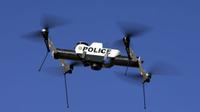
Small aerial drones are moving from the battlefield to local communities, and the pace grows faster; during the next year, drones may be used in cities and towns to help fight crime and keep officers out of danger; their use would save on the cost of fuel for police helicopters; some would feel safer as a result, but activists worry that this could be the beginning of a systemic invasion of privacy
-
-
Worries about UAV use in both military and domestic missions exaggerated

Dr. Steven P. Bucci, a Senior Fellow for Homeland Security & Defense Issues at the Heritage Foundation, talked with Derek Major, the Homeland Security News Wire’s executive editor, about the growing use of UAVs in both military and domestic law-enforcement missions; Bucci says that in targeting militants, American drone operators exercise a great deal of care to minimize, and eliminate if possible, death and injury to innocent civilians; he also says that the use of drones in domestic law-enforcement missions, if done properly, will not pose Big Brother risks, because drones may make surveillance easier and cheaper, but it will not give law-enforcement agencies any new authorities
-
-
New approach to identifying remains allows reopening of cold cases
In an effort to identify the thousands of John/Jane Doe cold cases in the United States, researchers have found a multidisciplinary approach to identifying the remains of missing persons; using the new method, the researchers were able to identify the remains of a missing child forty-one years after the discovery of the body
-
-
Motorola Solutions invests in SST, provider of ShotSpotter gunfire location and analysis technology
Motorola Solutions Venture Capital joins major existing investors in a $12 million new investment round in SST, Inc., developer of the ShotSpotter acoustic gunfire location and analysis system; the strategic investment aims to help expand the usage of ShotSpotter by law enforcement agencies throughout the United States and globally in advancing next-generation 911 (NG911) capabilities and initiatives
-
-
Imagining first responders’ high-tech future
What kinds of gear will be needed by future firefighters, EMTs, and police officers? DHS Science and Technology Directorate researchers asked the experts, then applied sophisticated math to discover unlikely patterns
-
-
Speed camera detectors gaining popularity in Europe
There are 25,000 speed cameras in Europe, and the governments of European countries publicize the cameras’ locations; still, million so Europeans install speed camera detectors in their smartphone; such speed camera detectors are legal in all European countries except Germany and Switzerland, which does not stop hundreds of thousands of Germans from using them
-

- All
- Regional
- Water
- Biometrics
- Borders/Immig
- Business
- Cybersecurity
- Detection
- Disasters
- Government
- Infrastructure
- International
- Public health
- Public Safety
- Communication interoperabillity
- Emergency services
- Emergency medical services
- Fire
- First response
- IEDs
- Law Enforcement
- Law Enforcement Technology
- Military technology
- Nonlethal weapons
- Nuclear weapons
- Personal protection equipment
- Police
- Notification /alert systems
- Situational awareness
- Weapons systems
- Sci-Tech
- Sector Reports
- Surveillance
- Transportation
Advertising & Marketing: advertise@newswirepubs.com
Editorial: editor@newswirepubs.com
General: info@newswirepubs.com
2010-2011 © News Wire Publications, LLC News Wire Publications, LLC
220 Old Country Road | Suite 200 | Mineola | New York | 11501
Permissions and Policies
Editorial: editor@newswirepubs.com
General: info@newswirepubs.com
2010-2011 © News Wire Publications, LLC News Wire Publications, LLC
220 Old Country Road | Suite 200 | Mineola | New York | 11501
Permissions and Policies