
-
U.S. nuclear program under greater scrutiny
The ongoing nuclear crisis in Japan has caused countries around the world to reconsider its nuclear plans; Germany recently announced that it was ending its nuclear program, while Sweden, Venezuela, and China have all announced that they were temporarily suspending their nuclear programs to conduct safety reviews; lawmakers and engineers in the United States are also pushing for greater scrutiny of nuclear power plants; in its latest report the Union of Concerned Scientists sharply criticized the U.S. Nuclear Regulatory Commission (NRC) for not properly enforcing safety regulations at nuclear power plants;
-
-
Safer wind turbine developed to minimize DHS objections
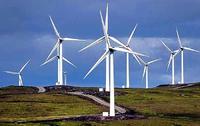
In the past wind turbine farms have faced opposition from the Department of Defense (DOD) and the Federal Aviation Administration (FAA) due to the interference they cause radar systems; wind turbines distort radars causing air traffic controllers to see them as storms and the interference generated by the wind farms can even cause planes to disappear completely from radar screens; a new wind turbine model will help minimize the impact that wind turbine fields have on radars; the model will be used by various government agencies including DHS, DOD, and the Department of Energy to decide whether a proposed wind farm can move forward
-
-
Wind energy's dirty secret
Vast tracts of land have been turned into toxic wastelands to fuel the increasing demand for green energy; rare Earth metals like neodymium are critical components in wind turbines and electric cars, but the process to extract them is damaging to the environment; China, the world’s largest supplier of rare Earth metals, has largely ignored environmental considerations and left Inner Mongolia a widening sea of radioactive waste; the United States is currently ramping up production of rare Earth minerals, but is seeking to find more sustainable production methods; wind power still has fewer environmental repercussions than coal or oil
-
-
China's nuclear power expansion is based on thorium
The thorium fuel cycles produce almost no plutonium, and fewer higher-isotope residuals; thorium is much more abundant than uranium, and the reduced plutonium output eases proliferation concerns; the energy output per ton is also attractive; China has committed itself to establishing an entirely new nuclear energy program using thorium as a fuel; six heavy-water thorium reactors are planned in India, which has the world’s largest thorium deposits
-
-
Growing worries about security of Suez Canal
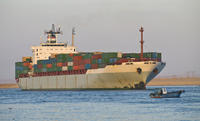
More than 35,000 ships crossed the Suez in 2009, about 10 percent of them oil tankers; if the Suez Canal were to close, oil tankers would be forced to sail around southern Africa — adding some 6,000 miles to the journey; this translates to an extra twelve days traveling from Saudi Arabia to Houston; based solely on speculation and risk, experts say the price of crude oil has gone up $5.00 a barrel since Friday; U.S. officials keep silent about how the United States might respond if Egyptian officials could no longer guarantee safe passage for the tens of thousands of ships that pass through the canal each year
-
-
Nuclear experts downplay China nuclear 'breakthrough'
Earlier this month, the China National Nuclear Corporation said it had achieved a significant “breakthrough” by developing a fuel reprocessing technology that will extend the lifespan of Beijing’s proven uranium deposits to 3,000 years, from the current forecast of 50-70 years; nuclear experts say, however, that other countries already own such technology — and that the real question is whether China will reprocess spent fuel on an industrial scale
-
-
U.S. lacks infrastructure to increase use of ethanol fuel
Scientists at Purdue University say the United States lacks the infrastructure to meet the federal Renewable Fuel Standard with ethanol; researchers say the United States has hit the “blending wall” and lacks the ability to consume more ethanol than what is currently produced; less than 3 percent of vehicles on the road are equipped to handle ethanol fuels and there are only 2,000 pumps; the federal Renewable Fuel Standard requires nearly three times as much renewable fuel to be produced per year by 2022
-
-
Plan for Massachusetts LNG site faces growing opposition
The Weaver’s Cove energy project will see up to seventy liquefied natural gas (LNG) tankers a year travel up Narragansett Bay to berth in Mt. Hope Bay; from there, a sub-sea pipe would carry the liquefied gas more than four miles up the Taunton River to a storage facility at a former oil terminal; Massachusetts and Rhode Island politicians work to block the Fall River storage facility, saying a terrorist attack or accident would place thousands of people in peril in the densely populated city and harm fish habitat and tourism
-
-
The best place for a wind turbine: 30,000 feet above ground
At altitude of 2,000 feet (610 meters), wind velocity is two to three times greater than at ground level; since power production goes up with the cube of that wind velocity, this means that at 2,000 feet above ground, wind produces 8 to 27 times the power produced by wind at ground level; if we send turbines farther aloft, into the 150 mph (240 kph) jet stream at 30,000 feet (9,150 meters), than power production grows from 500 watts per meter for ground-based wind turbines to about 20,000, 40,000 watts per square meter; this is very high energy density — and NASA is examining the project’s feasibility
-
-
Russia, Italy to build new fusion reactor
The reactor, designed by MIT researchers, is based on MIT’s Alcator fusion research program, which has the highest magnetic field and highest plasma pressure of any fusion reactor, and is the largest university-based fusion reactor in the world; the new reactor, called Ignitor, would be about twice the size of Alcator — but much smaller and less expensive than the ITER fusion reactor currently under construction in France
-
-
U.S. military warns of massive oil shortages by 2015
A new study by the U.S. military warns of serious oil shortages by 2015: surplus oil production will disappear by 2012, and as early as 2015 the shortfall in output could reach nearly 10 million barrels per day; the Joint Operating Environment report paints a bleak picture of what can happen on occasions when there is serious economic upheaval: “One should not forget that the Great Depression spawned a number of totalitarian regimes that sought economic prosperity for their nations by ruthless conquest,” it warns darkly
-
-
U.S. grid-security measures may hurt Canadian companies
The growing concern in the United States over the security of the national grid has lead to security measures — and proposed legislation — aiming to make the security of the grid more robust; trouble is, much of the U.S. electricity comes from Canada, and some of the contemplated security measures my disrupt transmission of power from across the border
-
-
Doubts raised on nuclear industry viability
There are two problems facing the nuclear power industry: civilian and military stockpiles and re-enriched or reprocessed uranium sources contribute 25,000 of the 65,000 tons of uranium used globally each year; the rest is mined directly, but scientists say that nobody knows where the mining industry can find enough uranium to make up the shortfall; also, the cost per kilowatt of capacity generated by nuclear power is $4,000; generating identical capacity from coal costs $3,000, and the cost for natural gas generation is $800; this makes the nuclear option a big financial gamble
-
-
A landmark investment to finance Canada-U.S. grid connection
The biggest Canada-U.S. power grid project — a privately funded 1,200- to 1400-megawatt transmission line between Quebec and southern New Hampshire — will lower the cost of power throughout New England; the project could also meet one third of the New England’s Regional Greenhouse Gas Initiative commitments with the hydroelectric power Hydro-Québec could pump through the line
-
-
Oil production to peak before 2030
New reports says that oil will become increasingly expensive and harder to find, extract, and produce; significant new discoveries, such as the one announced recently in the Gulf of Mexico, are only expected to delay the peak by a matter of days and weeks; to maintain global oil production at today’s level will require the equivalent of a new Saudi Arabia every three years
-

- All
- Regional
- Water
- Biometrics
- Borders/Immig
- Business
- Cybersecurity
- Detection
- Disasters
- Government
- Infrastructure
- International
- Public health
- Public Safety
- Communication interoperabillity
- Emergency services
- Emergency medical services
- Fire
- First response
- IEDs
- Law Enforcement
- Law Enforcement Technology
- Military technology
- Nonlethal weapons
- Nuclear weapons
- Personal protection equipment
- Police
- Notification /alert systems
- Situational awareness
- Weapons systems
- Sci-Tech
- Sector Reports
- Surveillance
- Transportation
Advertising & Marketing: advertise@newswirepubs.com
Editorial: editor@newswirepubs.com
General: info@newswirepubs.com
2010-2011 © News Wire Publications, LLC News Wire Publications, LLC
220 Old Country Road | Suite 200 | Mineola | New York | 11501
Permissions and Policies
Editorial: editor@newswirepubs.com
General: info@newswirepubs.com
2010-2011 © News Wire Publications, LLC News Wire Publications, LLC
220 Old Country Road | Suite 200 | Mineola | New York | 11501
Permissions and Policies