
-
WHO issues list of bacteria for which new antibiotics are urgently needed
WHO today published its first ever list of antibiotic-resistant “priority pathogens” – a catalogue of twelve families of bacteria that pose the greatest threat to human health. The list was drawn up in a bid to guide and promote research and development (R&D) of new antibiotics, as part of WHO’s efforts to address growing global resistance to antimicrobial medicines.
-
-
Device rapidly, accurately, inexpensively detects Zika virus at airports, other sites
About the size of a tablet, a portable device that could be used in a host of environments like a busy airport or even a remote location in South America, may hold the key to detecting the dreaded Zika virus accurately, rapidly and inexpensively using just a saliva sample. While scientists across the world are scrambling to find some sort of immunization, researchers are working to develop a diagnostic tool to reduce the impact of the outbreak until a vaccine is identified.
-
-
Step closer to developing major new drug in fight against antimicrobial resistance
Scientists have for the first time determined the molecular structure of a new antibiotic which could hold the key to tackling drug resistant bacteria. This development is an important next step in understanding how different derivatives of teixobactin function, and which building blocks are needed for it to successfully destroy drug resistant bacteria.
-
-
Malaria superbugs pose threat to global malaria control
A lineage of multidrug resistant P. falciparum malaria superbugs has widely spread and is now established in parts of Thailand, Laos and Cambodia, causing high treatment failure rates for the main falciparum malaria medicines, artemisinin combination therapies (ACTs). The emergence and spread of artemisinin drug resistant P falciparum lineage represents a serious threat to global malaria control and eradication efforts.
-
-
Global partnership to prevent epidemics with new vaccines launched
A global coalition to create new vaccines for emerging infectious diseases, designed to help give the world an insurance policy against epidemics, launches today at the World Economic Forum in Davos, Switzerland.
With an initial investment of $460 million from the governments of Germany, Japan, and Norway, plus the Bill & Melinda Gates Foundation and the Wellcome Trust, CEPI - the Coalition for Epidemic Preparedness Innovations will seek to outsmart epidemics by developing safe and effective vaccines against known infectious disease threats that could be deployed rapidly to contain outbreaks, before they become global health emergencies.
-
-
Drug-resistant “nightmare bacteria” can diversify, spread
A family of highly drug-resistant and potentially deadly bacteria may be spreading more widely — and more stealthily — than previously thought. CRE, which tend to spread in hospitals and long-term care facilities, cause an estimated 9,300 infections and 600 deaths in the United States each year, according to the DCD.
-
-
Nevada woman killed by superbug resistant to every known antibiotic
A 70-yer old woman in Nevada has died after a superbug which infected her proved resistant to every available type of antibiotic. The woman was already infected in India, where she had an extended stay, and was hospitalized there several times. She returned to Nevada in August 2016. She was admitted to a hospital shortly after her return, but died a month later after treatment with twenty-six different antibiotics was futile.
-
-
Old antibiotics, new tools to combat bio agents
More than 100 antibiotic compounds have been discovered since Alexander Fleming invented penicillin in 1928, but none within the past thirty years. Now a joint venture is exploring a new class of tetracycline that could combat biological threats to our warfighters.
-
-
Influenza: The search for a universal vaccine
No one wants to catch the flu, and the best line of defense is the seasonal influenza vaccine. But producing an effective annual flu shot relies on accurately predicting which flu strains are most likely to infect the population in any given season. It requires the coordination of multiple health centers around the globe as the virus travels from region to region. Once epidemiologists settle on target flu strains, vaccine production shifts into high gear; it takes approximately six months to generate the more than 150 million injectible doses necessary for the American population. With current technology, there may never be a “one and done” flu shot. And epidemiological surveillance will always be necessary. However, it is not inconceivable that we can move from a once-per-year model to a once-every-10-years approach, and we may be within just a few years of being there.
-
-
$1.87 million for biothreat vaccine research
CUBRC, Inc. two weeks ago announced that CUBRC’s Biological and Medical Sciences team, in collaboration with EpiVax, Inc., has received a four-year grant worth $1.87 million from the Defense Threat Reduction Agency (DTRA) within the Department of Defense (DoD). CUBRC, EpiVax, and scientists at the University of Florida will be investigating immune cells from patients that were previously infected with Burkholderia pseudomallei to understand how this bacterium evades the human immune system and use that information to engineer an effective vaccine.
-
-
Final trial results confirm Ebola vaccine provides high protection against disease
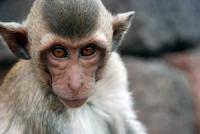
Since Ebola virus was first identified in 1976, sporadic outbreaks have been reported in Africa. But the 2013-2016 West African Ebola outbreak, which resulted in more than 11,300 deaths, highlighted the need for a vaccine. An experimental Ebola vaccine was highly protective against the deadly virus in a major trial in Guinea, according to results published in The Lancet. The vaccine is the first to prevent infection from one of the most lethal known pathogens, and the findings add weight to early trial results published last year.
-
-
The new “100% effective” Ebola vaccine owes a debt to the scientists who beat smallpox
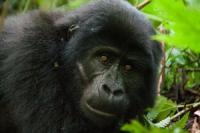
Almost a year after the official end of the Ebola outbreak in West Africa, the final results from one of the only Ebola vaccine trials are now in – and they look very promising. Despite being carried out under some of the most challenging conditions, the trial appears to be an exceptionally well-run study, comprehensive in its nature, and with a very positive result. This surely cements this vaccine as one important tool in controlling outbreaks of Ebola in the future. It also gives us a way to test new vaccines for other viruses that can crop up and take us by surprise, such as Lassa fever virus and Nipah viruses. We just have to hope that scientists have got more vaccines in the pipeline for us to test.
-
-
Supercomputer simulations help develop new approach to tackle antibiotic resistance
Supercomputer simulations at the Department of Energy’s Oak Ridge National Laboratory have played a key role in discovering a new class of drug candidates that hold promise to combat antibiotic resistance. Researchers combined lab experiments with supercomputer modeling to identify molecules that boost antibiotics’ effect on disease-causing bacteria.
-
-
People with Ebola may not always show symptoms
A research team determined that 25 percent of individuals in a Sierra Leone village were infected with the Ebola virus but had no symptoms, suggesting broader transmission of the virus than originally thought. These individuals had antibodies to the virus, suggesting they had been infected at one time — yet said they had had no symptoms during the time of active transmission in the village. Theresearch confirms previous suspicions that the Ebola virus does not uniformly cause severe disease, and that people may be infected without showing signs of illness.
-
-
Ultra-long acting pill releases daily doses of medicine for a month
Imagine swallowing a pill today that continues releasing the daily dose of a medicine you need for the next week, month, or even longer. Investigators have developed a long-acting drug delivery capsule that may help to do just that in the future. To test the capsule’s real-world applications, the team used both mathematical modeling and animal models to investigate the effects of delivering a sustained therapeutic dose of a drug called ivermectin, which is used to treat parasitic infections such as river blindness. Ivermectin has an added bonus of helping keep malaria-carrying mosquito populations at bay.
-

- All
- Regional
- Water
- Biometrics
- Borders/Immig
- Business
- Cybersecurity
- Detection
- Disasters
- Government
- Infrastructure
- International
- Public health
- Public Safety
- Communication interoperabillity
- Emergency services
- Emergency medical services
- Fire
- First response
- IEDs
- Law Enforcement
- Law Enforcement Technology
- Military technology
- Nonlethal weapons
- Nuclear weapons
- Personal protection equipment
- Police
- Notification /alert systems
- Situational awareness
- Weapons systems
- Sci-Tech
- Sector Reports
- Surveillance
- Transportation
Advertising & Marketing: advertise@newswirepubs.com
Editorial: editor@newswirepubs.com
General: info@newswirepubs.com
2010-2011 © News Wire Publications, LLC News Wire Publications, LLC
220 Old Country Road | Suite 200 | Mineola | New York | 11501
Permissions and Policies
Editorial: editor@newswirepubs.com
General: info@newswirepubs.com
2010-2011 © News Wire Publications, LLC News Wire Publications, LLC
220 Old Country Road | Suite 200 | Mineola | New York | 11501
Permissions and Policies